



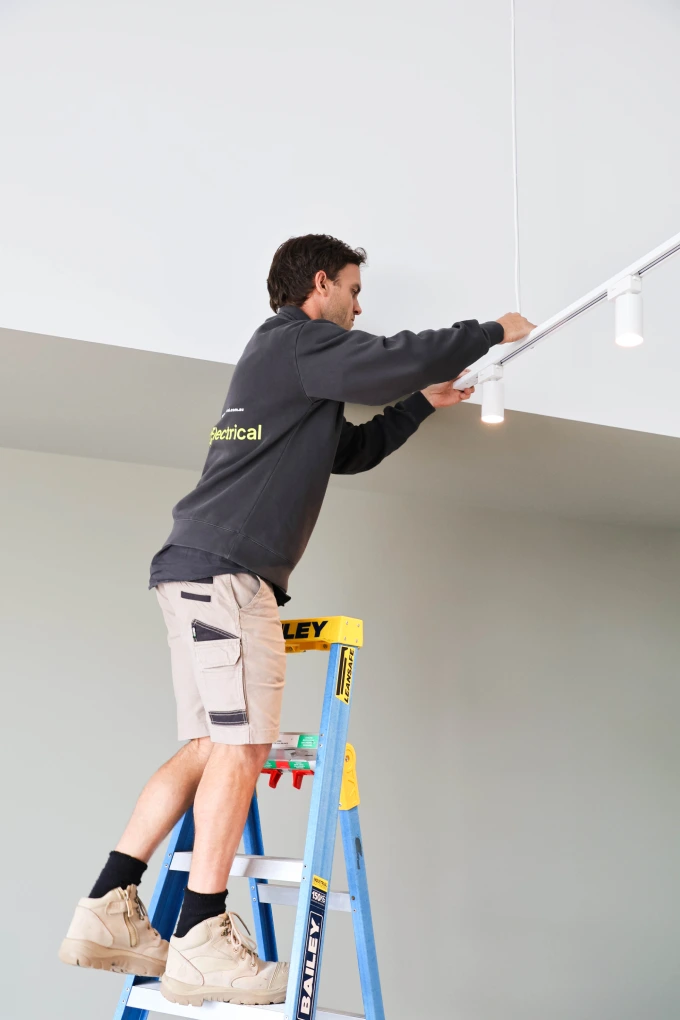
Lights flicker for several reasons, from a loose globe or an LED that doesn’t suit its dimmer, through to a problem with the wiring, a circuit or the power supply. As a rule of thumb, one flickering light usually points to the globe or the fitting, while several lights or a whole area flickering is more likely to be a circuit, switchboard or supply issue.
The only safe check you can do yourself is the light globe, with the light switched off and the globe cool. Everything else is a job for a licensed electrician.
Flickering lights can be annoying, and sometimes they’re a warning sign of a bigger electrical problem. Whether it’s a single light fitting or several rooms across your home in Newcastle, Lake Macquarie or the Hunter, knowing the likely cause helps you decide what to do next. Here are the nine common reasons your lights might flicker, and when to call a licensed electrician.
1. Loose Light Globes
A common cause can be a globe that isn’t screwed or pushed in firmly. A loose globe makes poor contact in the fitting, so the light can flicker. This can happen with any type of globe, from old incandescent globes to LEDs.
Solution: Switch the light off, let the globe cool, then tighten it or replace it. That’s the one electrical job NSW allows a homeowner to do. If the light still flickers with a good globe in place, stop there and call a licensed electrician. Don’t open the fitting to look for the problem.
2. Wrong Type of Globe
So, do LED lights flicker? They can, and the globe or the dimmer is often the reason. Not every LED is dimmable, and some older dimmers were designed for incandescent globes and don’t work well with low wattage LEDs. That mismatch can be a common cause of LED lights flickering, especially on a dimmer at low settings.
Other causes include a failing LED driver, cheap or mismatched globes on the same circuit, and LED strip lights with an unsuitable or failing power supply. If you see LED lights flashing on and off rather than gently flickering, the driver or power supply is a likely suspect.
Solution: Check that any LED globe on a dimmer is marked dimmable, and use good quality globes that match each other. You can change the globe yourself with the light off. Matching a dimmable LED to a compatible dimmer, replacing a dimmer, or replacing an LED driver is licensed work, so talk to a licensed electrician. If you’re thinking about updating your lighting, read about energy efficient lighting upgrades in Newcastle.
3. Faulty Light Switches
A worn, loose or faulty switch can interrupt the power to a light and make it flicker. It’s more common with switches that have been used for many years or weren’t installed properly.
Solution: If a light flickers when you touch or move the switch, or the switch feels warm, crackles or sparks, stop using it and call a licensed electrician. Inspecting or replacing a switch is licensed work, not a DIY job.
4. Voltage Fluctuations
If your lights dip or flicker when a large appliance starts up, such as an air conditioner, a pump or pool equipment, the appliance may be drawing a burst of power when it starts. In summer, plenty of Newcastle homes notice this when the air conditioning kicks in.
Solution: Note when it happens. If it’s frequent, gets worse, or affects lights in more than one room, have a licensed electrician check the circuit and the supply to your home. They may recommend a dedicated circuit for a heavy appliance.
5. Overloaded Circuits
Too many appliances on one circuit can make lights dim or flicker when something starts up. It’s common in older homes with fewer circuits and in modern homes with a lot of appliances running at once.
Solution: Use fewer high power appliances at the same time on that circuit, and ask a licensed electrician whether a new circuit is needed. If circuit breakers trip often as well, read why a circuit breaker trips. Don’t move circuits around at the switchboard yourself.

6. Loose Electrical Wiring
Loose or damaged wiring can cause flickering that keeps coming back, and it’s a safety risk. Loose connections can build up heat and arc at a light fitting, a switch, a power point or in the roof space. Over time, connections can work loose through wear, vibration or poor workmanship.
Solution: This is always licensed work. If you notice a burning smell, buzzing or a warm power point or switch, treat it as urgent and call a licensed electrician. Read more about a burning smell from the switchboard and what an electrical fire smells like. NSW Government advice is that DIY electrical work is dangerous and illegal, and that unless you’re a qualified electrician you should never “carry out any electrical maintenance other than changing a light globe.” You can read that guidance on the NSW Government page about electrical safety in the home.
7. Utility Service Issues
Sometimes the problem is outside your home. If your neighbours’ lights are flickering too, or several homes in the street are affected, it may be an issue with the local network rather than your wiring.
Solution: Ask your neighbours whether they’ve noticed the same thing. Ausgrid is the local network for Newcastle and much of the Hunter. To report a power outage, hazard or emergency, call Ausgrid on 13 13 88, 24 hours a day, 7 days a week. If anyone’s life is in danger, call 000. Ausgrid advises staying at least 8 metres away from fallen powerlines. If only part of your home is affected, see why half the house has no power.
8. Faulty Circuit Breaker
A worn or faulty circuit breaker can cause the lights on that circuit to flicker or drop out. Breakers are designed to trip when a circuit is overloaded or faulty, but an old or failing one may not work as it should.
Solution: If a breaker has tripped, you can try one safe reset: switch it fully off, then back on once. If it trips again, won’t stay on, or the lights still flicker, stop and call a licensed electrician. Don’t keep resetting it, and don’t switch breakers off one at a time to hunt for the fault. If a safety switch is tripping as well, our guide on a safety switch that keeps tripping explains the usual causes.
9. Switchboard Problems
An ageing, damaged or overloaded switchboard can struggle to supply steady power, and loose connections at the board can show up as flickering lights. Older Hunter homes may have boards with no safety switches or only one. In older Newcastle homes, some switchboards can be close to their limit with today’s appliances.
Solution: Have a licensed electrician inspect the switchboard. We only replace switchboards if they pose a significant safety risk due to age or wear. If yours does need work, read about a switchboard upgrade in Newcastle and the benefits of a switchboard upgrade.
When to Call a Licensed Electrician
Changing a globe is the only DIY fix. Call a licensed electrician if:
- More than one light or a whole area of the house flickers
- A light still flickers after you’ve tightened or changed the globe
- A switch, dimmer, power point or fitting is warm or discoloured
- You notice a burning smell, or buzzing at the switchboard
- A circuit breaker or safety switch won’t hold after one safe reset
Flickering lights can seem harmless, but some causes can lead to damaged appliances or a fire. A licensed electrician can test the circuit, find the fault and repair it safely. When the work is done, you receive a Certificate of Compliance for Electrical Work (CCEW).
Our licensed electricians work across Newcastle, Lake Macquarie and the Hunter from our base in Redhead, with over 40 years of combined experience. Book a residential electrician in Newcastle or see our electrical maintenance in Newcastle. Call us for a free quote. We provide emergency call-out services during operating hours and will always do our best to assist.
Call Insight Electrical, your local Newcastle electrician, on 0468 043 743, Monday to Friday, 7am to 5pm, or contact Insight Electrical online.
Preventing Future Flickering Issues
A few simple habits help keep your lights steady:
- Use good quality globes, and the type a licensed electrician recommends for dimmers and downlights.
- Spread heavy appliances out rather than running them all at once on one circuit.
- Book regular inspections, especially in an older home. See how often to get a home electrical inspection.
- If your home still has old wiring, read about rewiring an older Newcastle home.
Frequently Asked Questions
Why do my LED lights flicker?
Common reasons can include a non-dimmable LED on a dimmer, a dimmer that doesn’t suit LEDs, a failing driver or cheap, mismatched globes. You can change the globe with the light off. Dimmer and driver work is for a licensed electrician.
Should I be concerned if my lights flicker?
One light that flickers is often just the globe. Flickering across several rooms, or with a burning smell, buzzing or warm switches, can point to a wiring or switchboard fault, so call a licensed electrician.
What does it mean when multiple lights flicker?
When several lights flicker at once, the cause is more likely a circuit, the switchboard or the supply to your home than a single globe. Check whether your neighbours are affected, then call a licensed electrician.
How do I stop my lights from flickering?
Switch the light off, let the globe cool, then tighten or replace it. If the flickering continues, stop there. Switches, dimmers, fittings and wiring must be checked by a licensed electrician.
Why do my lights flicker when the air conditioner turns on?
A large appliance can draw a burst of power as it starts, causing a brief dip. If it happens often or affects several rooms, a licensed electrician should check the circuit and supply.
Why are all the lights in my street flickering?
It’s likely a network issue. Call Ausgrid on 13 13 88, 24 hours a day, 7 days a week, to report it. If anyone’s life is in danger, call 000.