



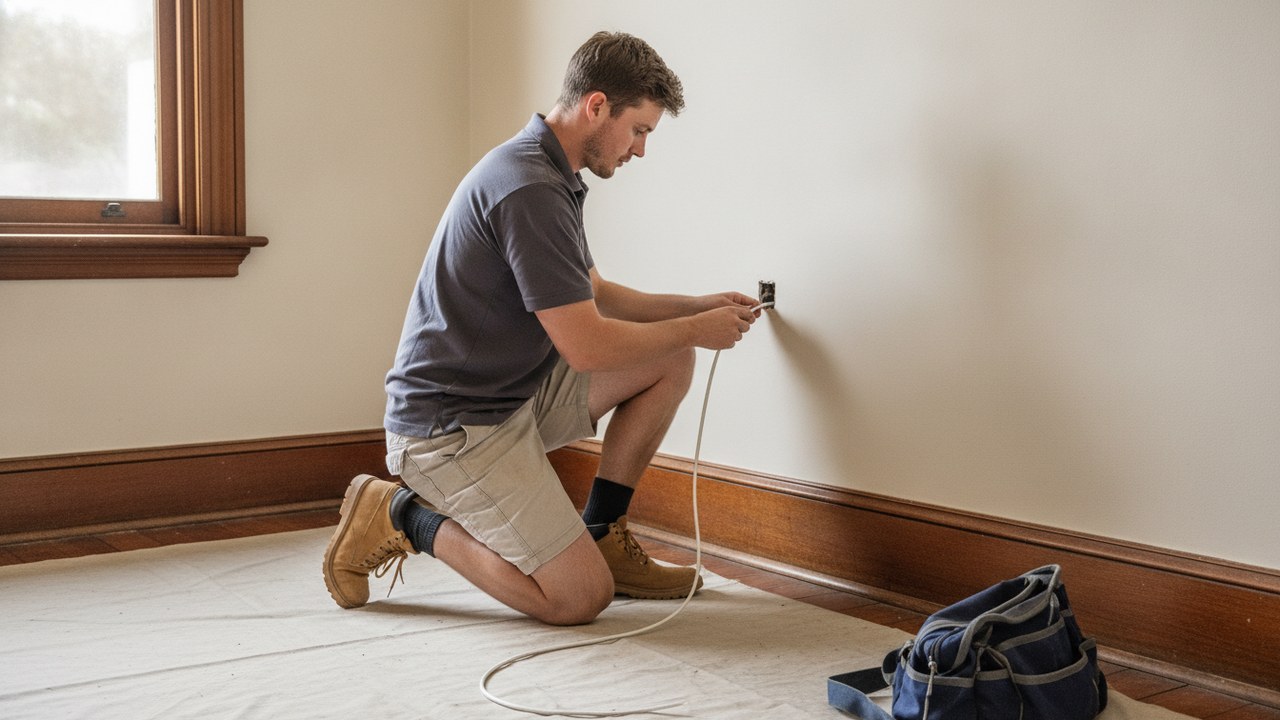
You may need to rewire your house if it still has its original wiring, an old fuse board, rubber-insulated cable, power points that run warm, or nowhere near enough power points for the way you live now. Not every older home needs a full rewire, though. Often the worst circuits can be rewired and the old fuse board replaced, and the rest of the wiring is fine. The only way to know for sure is to have a licensed electrician test it.
Newcastle has a lot of older housing: workers cottages in Hamilton, miners cottages in Wallsend, beachside homes in Merewether and heritage cottages in Maitland. A lot of these homes were wired for a very different household. This guide covers the signs to look for, what old wiring looks like, whether a partial or full rewire makes sense, and what the work is like to live through.
Signs you need to rewire your house
Some of these you can spot yourself. Others only show up when an electrician tests the circuits.
✓ An old fuse board. If your meter box has white ceramic fuses that pull out, instead of a row of switches, your wiring is likely to be as old as the board.
✓ No safety switches. Look for switches on the board with a “Test” button. If there are none, your circuits have no protection against electric shock.
✓ Fuses that blow or breakers that trip often. Now and then is normal. Again and again points to circuits that are overloaded or worn.
✓ Lights that flicker or dim when the air con, kettle or oven starts.
✓ Power points or switches that feel warm, look discoloured or crackle.
✓ Too few power points. Double adaptors and power boards in every room are a sign the wiring was never designed for today’s appliances.
✓ Crumbling cable. If you see cable with cracked or crumbling rubber coating in the roof space or under the house, don’t touch it.
✓ Outdoor points eaten by salt air, common in coastal suburbs.
If you notice a burning smell or see scorch marks on a power point or the switchboard, don’t touch it. Keep clear and call a licensed electrician, and if there’s smoke or fire, call 000. Our post on a burning smell from your switchboard explains what to do.
What old wiring looks like in Newcastle homes
In Australia, older homes were often wired with rubber-insulated cable. Over decades, the rubber dries out, cracks and crumbles, which can leave the copper inside exposed. Modern cable uses plastic insulation that lasts far better.
In Merewether, original fuse boards, rubber-sheathed cable and outdoor points eaten by salt air are all things we deal with regularly. Behind Beaumont Street in Hamilton, rows of workers cottages have wiring that predates almost every appliance in them.
The other common problem is simply capacity. Add a modern kitchen, reverse cycle air conditioning and a home office to a house wired for a few lights and a radio, and the original installation is well past what it was designed for.
Partial rewire or full rewire?
A rewire doesn’t have to mean the whole house. Once we’ve tested your wiring, we’ll tell you which option makes sense.
When a partial rewire makes sense
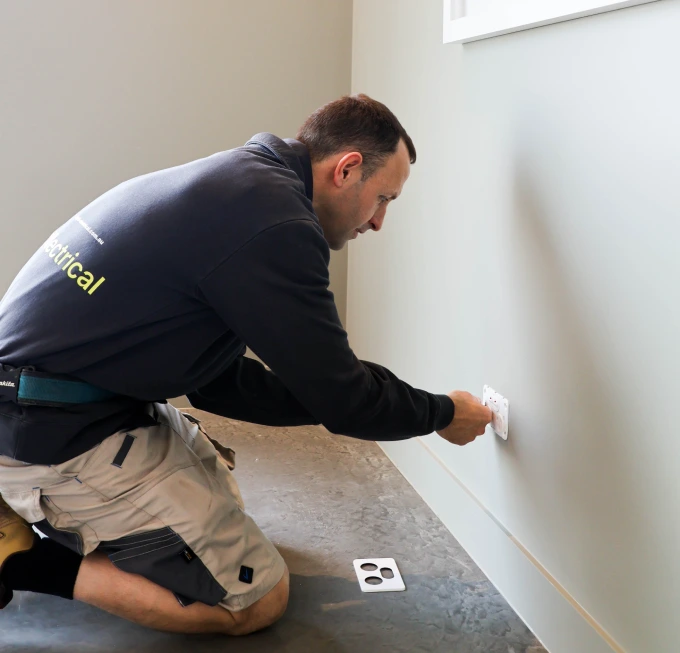
A partial rewire replaces the circuits that are faulty, unsafe or overloaded and leaves the sound ones in place. It suits homes where part of the house has already been rewired, such as an extension or a renovated kitchen, or where the problems sit on one or two circuits. It’s often done alongside a switchboard upgrade, so the old fuse board is replaced and every circuit gets safety switch protection.
When a full rewire is the better option
A full rewire replaces the wiring throughout the house. It’s usually the better choice when the original rubber-insulated cable is still in use across most of the house, when testing shows faults on many circuits, or when you’re renovating and the walls and ceilings are open anyway.
We’d rather take the time to explain what we’ve found than talk you into a job you don’t need. If a circuit can be repaired, we repair it. If it genuinely needs replacing, we show you why.
When is it worth rewiring an old house?
For many older homes, yes, especially at these points:
✓ When you’re renovating. With walls and ceilings open, running new cable is simpler and causes less disruption. It’s also the easiest time to add power points and lighting where you actually need them.
✓ When you’re adding air con, solar, a battery or an EV charger. New gear puts more load on your wiring and switchboard. We check that the supply and the board can handle it before anything goes in, so nothing trips or overheats down the track.
✓ When you’re buying or selling. Old wiring often comes up in building and pre-purchase inspections. A pre-purchase electrical inspection tells you where you stand before you commit.
✓ When the signs above keep showing up. Repeated trips, warm power points and flickering lights are your home telling you something.
Good advice matters as much as the wiring itself. Louise Howe told us the team “took time to explain and give ideas to help modify our home to be energy efficient and to have modern fixtures.” Jacob Sinclair, whose renovation and extension we worked on, said their “suggestions around lighting and power placement was top tier and really brought the best out of the space. Whilst still remaining within our budget.”
What is a house rewire like to live through?
A rewire means new cable running through your walls, ceilings and floors, but it doesn’t have to wreck your home.
Care around old plaster and timber
Older homes need patience. In cottages and heritage homes we run new cable with care, keep holes in old plaster and timber to a minimum, and match fittings to the style of the house where we can. Where we can, we run cable through the roof space and under the floor, which limits how much of the walls need opening.
A clean, contained work area
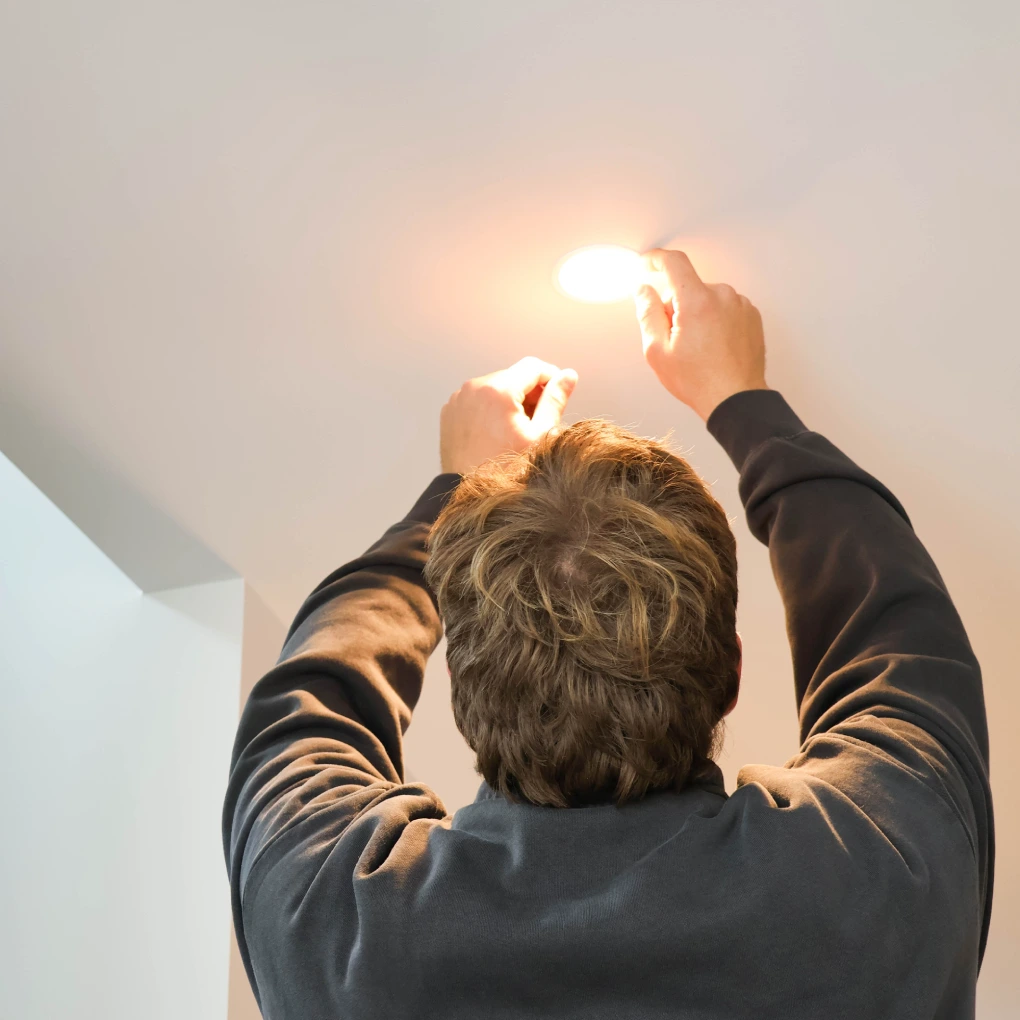
Our licensed electricians wear shoe covers to protect your floors. Drop sheets go down, dust is contained, and the site is left cleaner than we found it. We give you a specific time window and stick to it.
Staged work and power off in sections
A rewire can often be staged room by room or circuit by circuit, so you’re not without power for the whole job. We’ll talk you through the plan before we start, including when the power will be off.
How to prepare
- Clear space along the walls where we’ll be working, and move fragile items.
- Make sure we can reach the roof space and the area under the house.
- Tell us if anyone in the home relies on powered medical equipment.
- If you work from home, plan around the times your power and internet will be off.
How long does it take to rewire a house?
It depends on the size of the house, whether it’s single or double storey, how easy the roof space and underfloor are to reach, what the walls are made of, and whether the rewire is partial or full. A rewire done during a renovation, with the walls open, is usually quicker than one in a finished home.
Every house is different, so we assess your home first. Once we’ve looked at the job, we’ll give you a realistic timeframe for completion.
How much does a house rewire cost?
The cost of a rewire depends on several factors, so call us to talk through your home. The main ones are the size of the house, how many circuits need replacing, access to the roof space and underfloor, the type of walls, whether the switchboard is being upgraded at the same time, and how many new power points and lights you want added.
Because the switchboard is often part of the job, our guide to switchboard upgrade cost explains how that part is priced. Either way, you get a fixed price in writing before anything is pulled apart. If we find something unexpected, we stop and show you before going further, and nothing extra gets billed without your say-so.
Who can rewire a house in NSW?
Only a licensed electrician. In NSW, all electrical wiring work must be done by a licensed electrician, and DIY electrical work is illegal. You can check any electrician’s licence on the NSW Government’s licence check before you book.
Insight Electrical holds NSW contractor licence 297041C. All our installations follow AS/NZS 3000 and NSW electrical safety regulations. When the job is done, every circuit is tested and you’re left with a Certificate of Compliance in hand.
Frequently Asked Questions
Do I need to rewire my house to sell it?
In NSW, there’s no general requirement to rewire a house before you sell it. But old wiring often shows up in buyers’ building and pre-purchase inspections, and it can become part of the negotiation. Having the wiring checked before you list means there are fewer surprises.
Is it worth rewiring an old house?
Usually, if the house still has its original wiring, an old fuse board or no safety switches. It’s especially worth it when you’re renovating, adding air con, solar or an EV charger, or dealing with repeated trips and warm power points. A test of your wiring will show whether a partial rewire is enough.
How long does it take to rewire a 3 bedroom house?
It depends on access to the roof space and underfloor, the type of walls, the number of circuits and whether it’s a partial or full rewire. We assess your home first and then give you a realistic timeframe.
Do I need to rewire my house for solar panels or an EV charger?
Not always. What matters is whether your switchboard and wiring can safely handle the extra load. We check the incoming supply and the board before new gear goes in, and we’ll tell you if any circuits need work.
Can I stay in my house during a rewire?
Often, yes. A rewire can usually be staged so you’re not without power for the whole job. We’ll explain the plan, including when the power will be off, before work starts.
Will rewiring damage my walls?
Where we can, cable runs through the roof space and under the floor. Where walls do need opening, we keep holes in old plaster and timber to a minimum, contain the dust and clean up before we leave.
Does a rewire include a new switchboard?
Often. If your home still has an old fuse board, it’s usually replaced as part of the rewire so every circuit gets safety switch protection. We’ll include it in your quote if it’s needed.
Talk to a local electrician about your older home
If your home is showing any of these signs, or you’re planning a renovation, let us take a look. We’re a family-owned business based in Redhead with 40+ years combined experience, and we work on older homes across Newcastle, Lake Macquarie and the Hunter, from Hamilton cottages to beachside homes in Merewether.
Call 0468 043 743, Monday to Friday from 7am to 5pm, or contact us online for a free, no-obligation quote. You can also read more about our work as a residential electrician in Newcastle, or about house rewiring for renovations and new builds.