



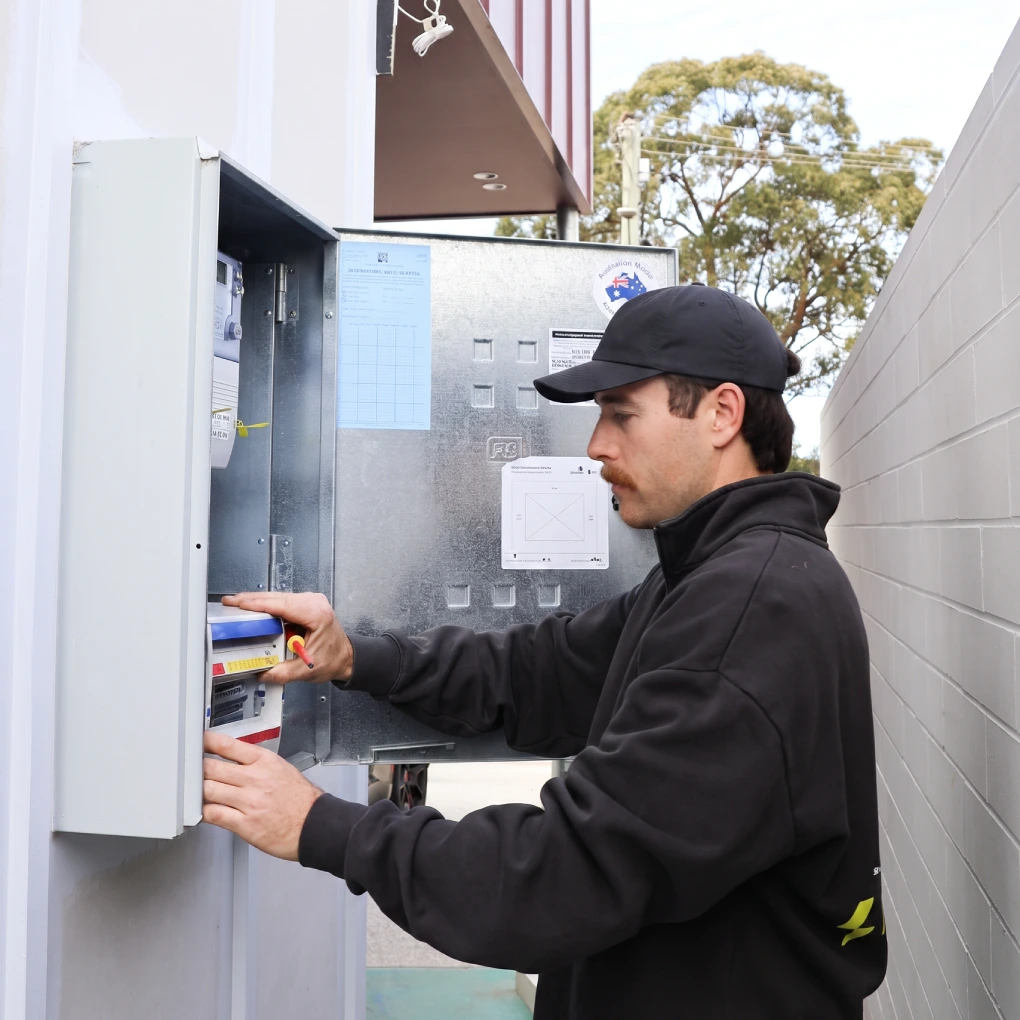
If your safety switch keeps tripping with nothing plugged in, the problem is usually still on the circuit. It’s most often a hardwired appliance, moisture, ageing wiring, a hidden fault or a failing safety switch, and the switch is doing its job by cutting the power when it detects current leaking to earth.
That protection matters, because leaking current is what causes an electric shock. In homes across Newcastle, Lake Macquarie and the Hunter, we see older wiring, coastal moisture and hardwired appliances behind most repeat trips. A safety switch that keeps tripping isn’t something to keep resetting. Below are the six most common causes, the one safe thing you can try, and when to call a licensed electrician.
A safety switch is also called an RCD, short for residual current device, so an RCD switch that keeps tripping is exactly the same problem. It’s not the same as a circuit breaker, though. If you’re not sure which device has tripped on your switchboard, read the difference between a safety switch and a circuit breaker.
A Faulty Appliance Could Still Be the Problem
Unplugging everything from the power points doesn’t disconnect every appliance in the house. A faulty appliance can still trip the safety switch if it’s hardwired, meaning it’s connected straight into the wiring rather than plugged in. Common examples include:
- Ovens and cooktops
- Hot water systems
- Ducted or split system air conditioners
- Pool pumps, heaters and spa equipment
- Dishwashers, rangehoods and exhaust fans on some installations
A worn heating element in an oven or hot water system is a classic cause. The element can start leaking current to earth, especially when it heats up, and the safety switch trips. That’s also why a trip can seem random. It happens when the hot water system kicks in overnight or the oven reaches temperature, not when you touch anything.
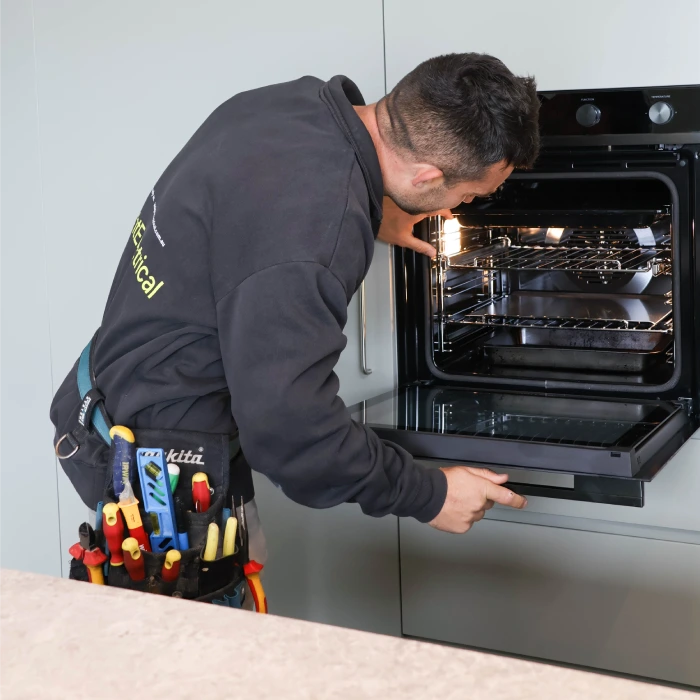
Don’t try to isolate or open a hardwired appliance yourself. A licensed electrician can test it, isolate it safely and tell you whether the appliance or the wiring to it is at fault.
Moisture in Your Electrical System
Water and electricity don’t mix, and moisture is one of the most common reasons a safety switch keeps tripping. Newcastle’s humidity, salt air and summer storms can send moisture into outdoor power points, garden lights, bathroom and laundry fittings, kitchens, garages and sheds. Condensation in a ceiling space can do the same to downlights and junctions.
Around Merewether, Bar Beach and Port Stephens, salt air corrodes outdoor points and fittings faster than inland, and older homes there can still have rubber-sheathed cable. If the trips started during or after wet weather, our guide on a safety switch that trips after rain covers that in detail.
If you can see damp, corrosion or condensation on a fitting, leave it and call a licensed electrician. Don’t try to dry it out, seal it or open it up.
Faulty or Deteriorating Wiring, Especially in Older Homes
Ageing wiring is a common cause of repeat trips in older Hunter homes. Over decades, cable insulation dries out, cracks and breaks down, and connections loosen. Once the insulation fails, current can leak to earth through the building, and the safety switch trips. Pests, renovations and nails through walls can damage cables in newer homes too.
Signs of a wiring problem can include:
- Flickering lights, or lights that dim when an appliance starts. See why lights flicker.
- A power point or switch that feels warm
- Buzzing or crackling from a power point, light or the board
- A burning smell. Read about a burning smell from the switchboard.
- Discoloured or scorched power points or switches
This is not a DIY job. NSW Government advice is that DIY electrical work is dangerous and illegal, and that unless you’re a qualified electrician you should never “carry out any electrical maintenance other than changing a light globe.” You can read that guidance on the NSW Government page about electrical safety in the home.
Your Safety Switch Might Be Faulty
Safety switches don’t last forever. Like any device, they can wear out, and a worn switch can trip when there’s no real fault, or fail to trip when there is one. That’s why it’s worth testing your safety switches every three to six months, in line with NSW guidance. Our guide on whether a safety switch should be on or off explains how to test it.
Signs a licensed electrician looks for include a switch that won’t stay up, a toggle that feels loose, or a switch that still trips with every circuit isolated. That last check is the electrician’s job, not yours. If the safety switch won’t turn back on at all, read about a safety switch that will not turn back on.
Your Circuit Is Overloaded
This one is often misunderstood. A safety switch trips on earth leakage, when some current escapes to earth. It doesn’t trip just because too many appliances are running. An overloaded circuit usually causes a circuit breaker trip instead, because the breaker protects the wiring from drawing more current than it can safely carry.
Running several high-draw appliances on one circuit can still matter. Heavy loads heat up ageing connections and worn insulation, and that can turn a small leak into one big enough to trip the safety switch. If you’re not sure which device is tripping, our guide on the difference between a safety switch and a circuit breaker will help you tell them apart.
If the board itself can’t keep up with your home, it may be time to talk about a switchboard upgrade in Newcastle. We only replace switchboards if they pose a significant safety risk due to age or wear. If a circuit can be repaired, we repair it. If it genuinely needs replacing, we show you why. Older boards are common here. Around Waratah some homes still have ceramic fuse boards. In older Newcastle homes, some switchboards can be close to their limit with today’s appliances.
A Hidden Electrical Fault
Sometimes the cause isn’t obvious at all. A loose connection on the switchboard, earth leakage in wiring hidden inside a wall or ceiling, or a fault that only shows up under load can all keep tripping the safety switch. The fault might be on any electrical circuit the safety switch protects, which is why it can be hard to pin down.
Finding a hidden fault takes testing equipment and a licensed electrician. They can isolate circuits and hardwired appliances one at a time, test the insulation on each, and track down where the current is leaking.

What You Can Safely Try Once
There is one safe thing a homeowner can try:
- Unplug any portable appliances that are still plugged in on that circuit.
- Look and listen at the main switchboard, sometimes still called the fuse box in older homes. If there’s smoke, a burning smell, buzzing or sparking, don’t touch it. If there’s smoke or flame, get everyone out and call 000.
- If everything looks normal, push the safety switch fully to OFF, then back to ON, once.
- If it trips again, stop and leave it off.
Don’t keep resetting it, tape it on or try to work out which circuit is at fault by switching breakers on and off. Some people call repeated trips nuisance tripping, but a safety switch that keeps tripping usually means there’s a real fault. For the ON and OFF rules, see whether a safety switch should be on or off, and if it won’t reset, see a safety switch that will not turn back on.
When to Call a Licensed Electrician
Call a licensed electrician if:
- It trips again after one reset
- Nothing is plugged in and it still trips
- There’s heat, scorching, buzzing or a burning smell
- The safety switch won’t reset at all
- It trips regularly, at night or at random times
A safety switch that keeps tripping is a warning about electrical hazards in your home, not just an inconvenience. A licensed electrician will test each circuit and hardwired appliance, find the fault and fix it. When the work is done, you receive a Certificate of Compliance for Electrical Work (CCEW). For ongoing help, see our electrical service and maintenance in Newcastle or book a residential electrician in Newcastle.
Frequently Asked Questions
Why does a safety switch keep tripping with nothing plugged in?
The fault is usually still on the circuit. Common causes are a hardwired appliance such as an oven or hot water system, moisture in a fitting, ageing wiring, a hidden fault or a worn safety switch. Try one reset, and if it trips again, call a licensed electrician.
Why is my RCD tripping even though nothing is plugged in?
An RCD and a safety switch are the same device, so the causes are the same. A hardwired appliance, moisture, damaged wiring or a faulty RCD can all leak current to earth and trip it, even with nothing plugged into the power points.
How can I tell if the safety switch is faulty or if it is the wiring?
You can’t safely tell at home. A licensed electrician tests the safety switch and each circuit with proper equipment to work out whether the switch, the wiring or an appliance is at fault.
Why does my safety switch keep tripping at night?
It can be a hardwired appliance on a timer, like a hot water system on an off-peak tariff, a fridge or freezer cycling on, or moisture from condensation overnight. There’s no single cause, so have a licensed electrician test the circuits.
Call Insight Electrical about a safety switch that keeps tripping
If your safety switch keeps tripping, especially with nothing plugged in, we can find out why. Our licensed electricians work across Newcastle, Lake Macquarie and the Hunter from our base in Redhead, with over 40 years of combined experience. We’re punctual and we respect your time. Call us for a free quote. We provide emergency call-out services during operating hours and will always do our best to assist.
Call Insight Electrical on 0468 043 743, Monday to Friday, 7am to 5pm, or contact Insight Electrical online.