



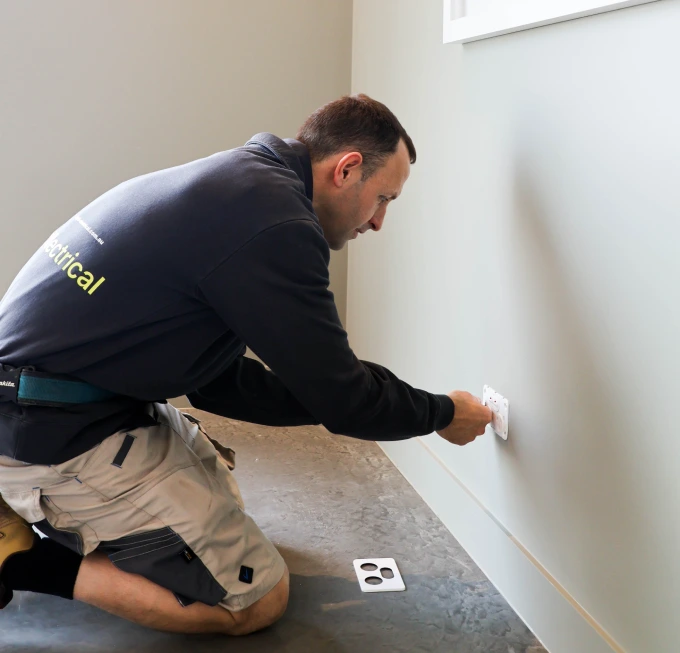
If a power point is faulty or has stopped working, stop using it straight away and call a licensed electrician. A faulty power point can give someone a shock, and it can start electrical fires in the wall or behind furniture. The main warning signs are a burning smell, sparking, a loose wall plug and a faceplate that feels warm or hot.
Whether you call it a power point, a power outlet or an electrical outlet, the same rule applies. In homes across Newcastle, Lake Macquarie and the Hunter, power points take a lot of daily use, and older ones wear out. This guide covers the seven signs to look for, the safe checks you can do yourself, why power points can stop working while the lights stay on, and when to call an electrician.
What are the warning signs of a faulty power point?
These are the seven signs that a power point needs checking, and possibly replacing. If you notice any of them, stop using that point until a licensed electrician has looked at it.
- Burning smell, smoke or scorching. A smell like hot plastic, black or brown burn marks, or discolouration around the sockets means something is overheating behind the faceplate. Treat it as a fire hazard and stop using the point.
- Sparking, buzzing or crackling. A tiny spark when you plug in can be normal. Frequent or large sparks, sparks with a smell, or a buzzing or crackling sound are not.
- A warm or hot faceplate. A power point shouldn’t feel warm to touch. If it does, unplug what’s on it and read our guide on a power point that feels hot.
- A cracked, damaged or loose point. Cracks in the faceplate, or a point that moves when you plug in, can expose live parts and loosen the connections behind it.
- A plug that won’t stay in. If a plug falls out or feels loose in the socket, the contacts inside may be worn. Poor contact creates heat.
- A shock or tingle. If you feel a shock or tingle when you touch the point or plug something in, stop using it immediately and keep everyone away from it.
- Moisture around the point. Water near a kitchen, bathroom, laundry or outdoor power point is a stop-using-it-now sign.
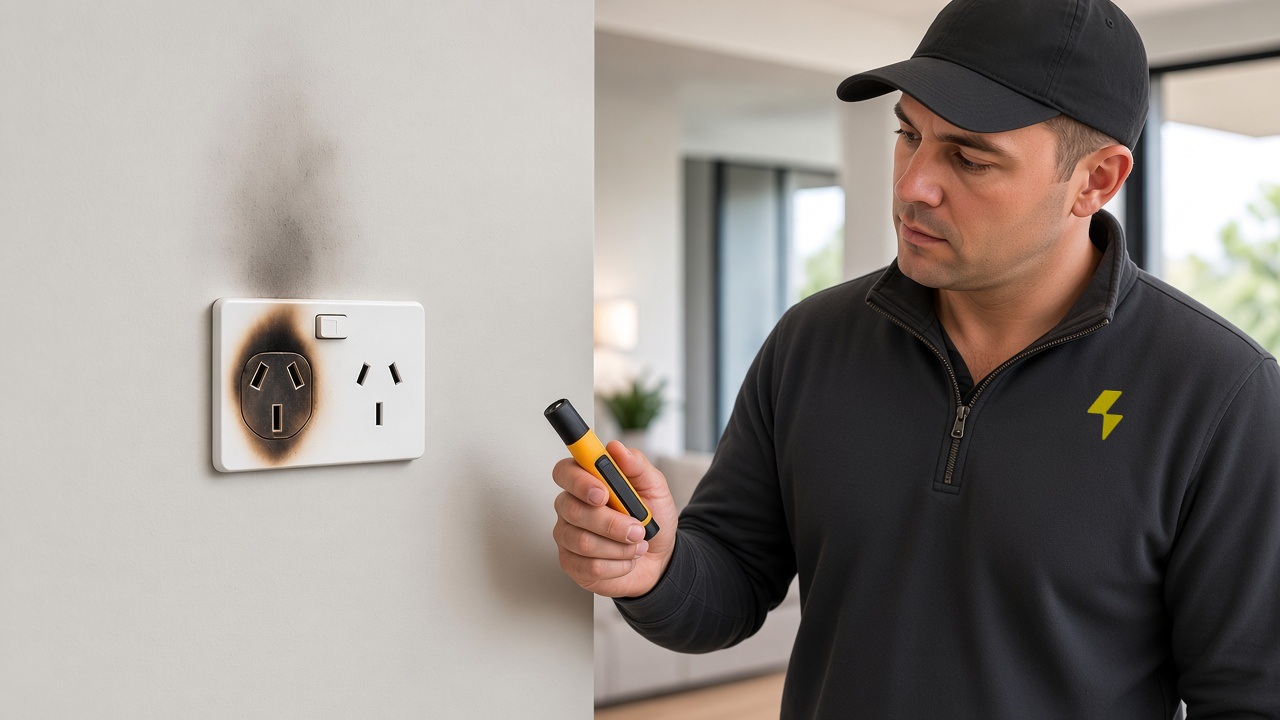
Lights that flicker or dim when you use one particular point can also point to a problem there. Flickering has plenty of other causes, so only treat it as a power point issue if it happens consistently with that one point. Our guide on why lights flicker covers the rest. If the smell seems to come from the board rather than the point, read about a burning smell from the switchboard.
What should I do if a power point is not working?
If a power point is not working, there are a few safe checks you can do before calling an electrician. None of them involve opening the point or touching wiring.
- Plug in a device you know works, like a lamp or phone charger, to rule out the appliance.
- Try another power point in the same room. If several points are dead, the problem is probably the circuit, not one point.
- Check the switchboard for a tripped safety switch or circuit breaker.
- Unplug the appliances on that circuit, then reset the switch once.
- If it trips again, leave it off and call a licensed electrician. Don’t keep resetting it or force the switch.
A power point that stays dead after those checks could have a fault in the point itself, loose connections, faulty wiring or damage from moisture. Too many appliances on one circuit can also cause trouble, because overloaded circuits make breakers trip and connections run hot. If a breaker keeps going, read about a circuit breaker that keeps tripping. If a switch is stuck or won’t turn on, leave it alone and have it checked.
Why are the power points not working but the lights are still on?
In most homes, the lights and power points are on separate circuits. That’s why power points can stop working while the lights stay on. It usually means a safety switch or circuit breaker protecting the power circuit has tripped, or there’s a fault at the switchboard. It’s a different problem from a single dead point, and replacing a power point won’t fix it.
Go to the switchboard and look for a switch in the off position. If it’s a safety switch, unplug appliances on that circuit and try resetting it once. If it won’t stay on, our guides on a safety switch that keeps tripping and a safety switch that will not turn back on explain the next steps. If you’re not sure which switch is which, here’s the difference between a safety switch and a circuit breaker.
While you’re at the board, it’s worth knowing that you should press the Test button on each safety switch every three to six months, in line with NSW guidance. That’s a homeowner check of the switch, not a full inspection of your electrical wiring.
What about moisture, bathrooms and outdoor power points?
Water and electricity don’t mix. If a power point has got wet from a leak, a storm or a spill, stop using it and keep clear until it’s been checked.
Outdoor points near the coast take extra wear. Around Merewether, Bar Beach and Port Stephens, salt air corrodes outdoor points and fittings faster than inland. Older Hunter homes can also have outdoor points that were never designed for the weather they face.
In Australian homes, protection for wet areas comes from a safety switch (RCD) on the circuit at the switchboard, and from weatherproof or IP-rated fittings for outdoor points. Both should be installed by a licensed electrician.
Can I replace a faulty power point myself?
No. In NSW, DIY electrical work is illegal. The NSW Government says you should not carry out any electrical maintenance other than changing a light globe. That includes replacing, repairing or rewiring a power point, even if it looks simple. Pressing the Test button on a safety switch is a homeowner check, but it isn’t permission to open a point or swap it out.
If you’ve searched for how to fix a faulty power point, the safe answer is to do the checks above, then call a licensed electrician to inspect, test and replace it.
When should you call a licensed electrician?
Call a licensed electrician if you notice any of these:
✓ Heat, a burning smell, burn marks or discolouration
✓ Sparking, buzzing or crackling
✓ A shock or tingle from the point or a plug
✓ A safety switch or breaker that keeps tripping
✓ Moisture in or around the point
✓ A point that stays dead after the safe checks
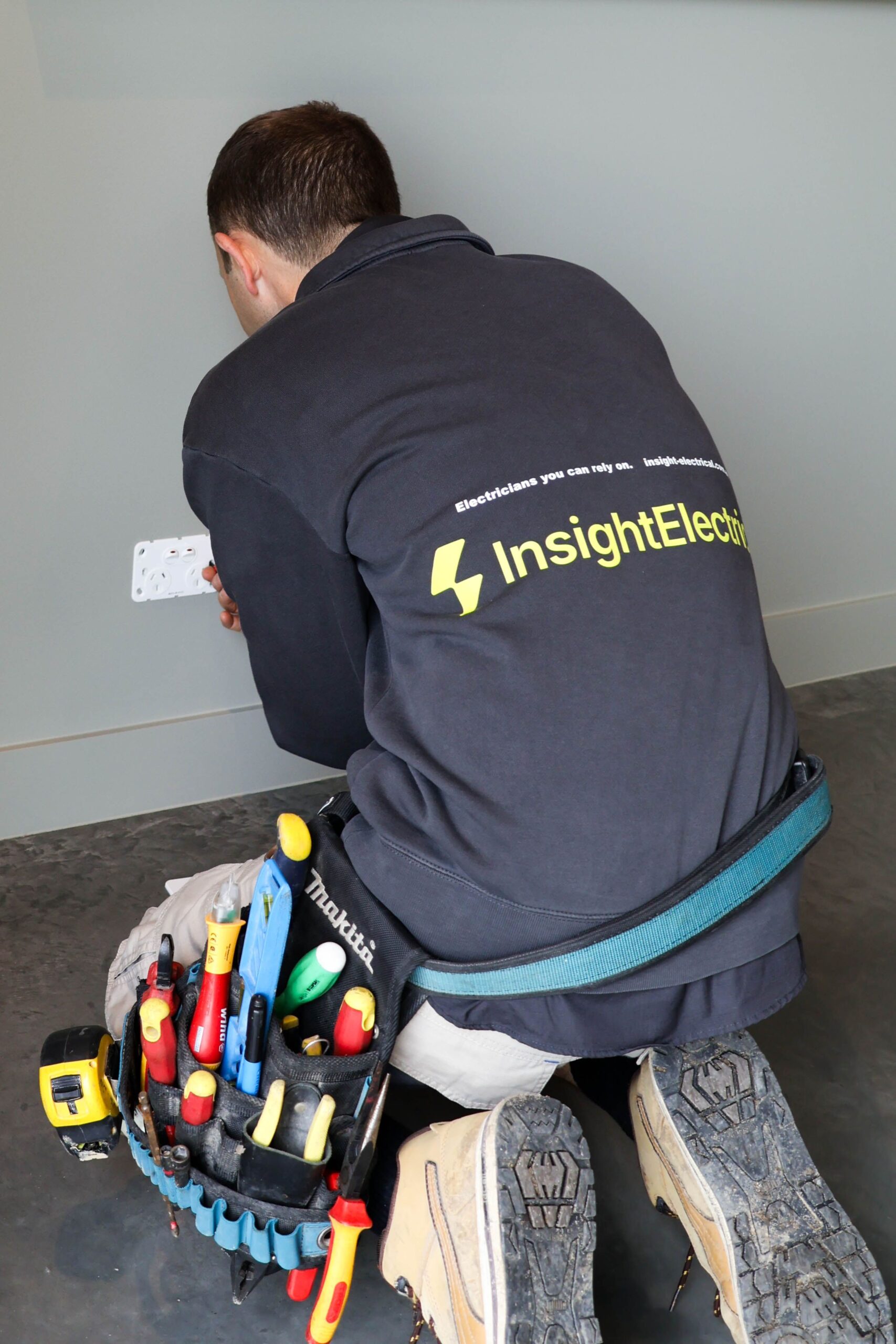
A licensed electrician can inspect and test the point, replace it if needed, and check for a wider wiring fault. If several points are showing signs of age, it may also be worth looking at how often to get an electrical inspection. For help with repairs and replacements, see our electrical service and maintenance in Newcastle or book a residential electrician in Newcastle. If you’re adding new points, our guide on what a power point installation can involve explains what affects the job.
Frequently asked questions
How do I know if my power point is faulty?
Look for a burning smell, burn marks or discolouration, sparking or buzzing, a warm faceplate, cracks or looseness, a plug that won’t stay in, or a shock when you touch it. If you notice any of these, stop using the point and call a licensed electrician.
What should I do if a power point stops working?
Try a device you know works, check other points in the room, then look at the switchboard for a tripped safety switch or circuit breaker. Reset it once. If it trips again or the point stays dead, call a licensed electrician.
Why are my power points not working but the lights are on?
Lights and power points are usually on separate circuits, so a tripped safety switch or circuit breaker on the power circuit can cut the points while the lights stay on. Check the switchboard, and call a licensed electrician if it won’t reset.
Can I replace a power point myself in NSW?
No. In NSW, DIY electrical work is illegal. The NSW Government says you should not carry out any electrical maintenance other than changing a light globe. Replacing or repairing a power point must be done by a licensed electrician.
How much does it cost to replace a power point?
It depends on the work involved, such as the type of point, its location and the condition of the wiring. Our guide on what a power point installation can involve explains the factors, and you can call us for a free quote.
Book a power point inspection with Insight Electrical
If a power point is sparking, smells hot or has stopped working, let us take a look. Our licensed electricians work across Newcastle, Lake Macquarie and the Hunter from our base in Redhead, with over 40 years of combined experience. If a circuit can be repaired, we repair it. If it genuinely needs replacing, we show you why. We’re punctual and we respect your time. We provide emergency call-out services during operating hours and will always do our best to assist.
Call Insight Electrical on 0468 043 743 (Monday to Friday, 7am to 5pm) or contact Insight Electrical online.