



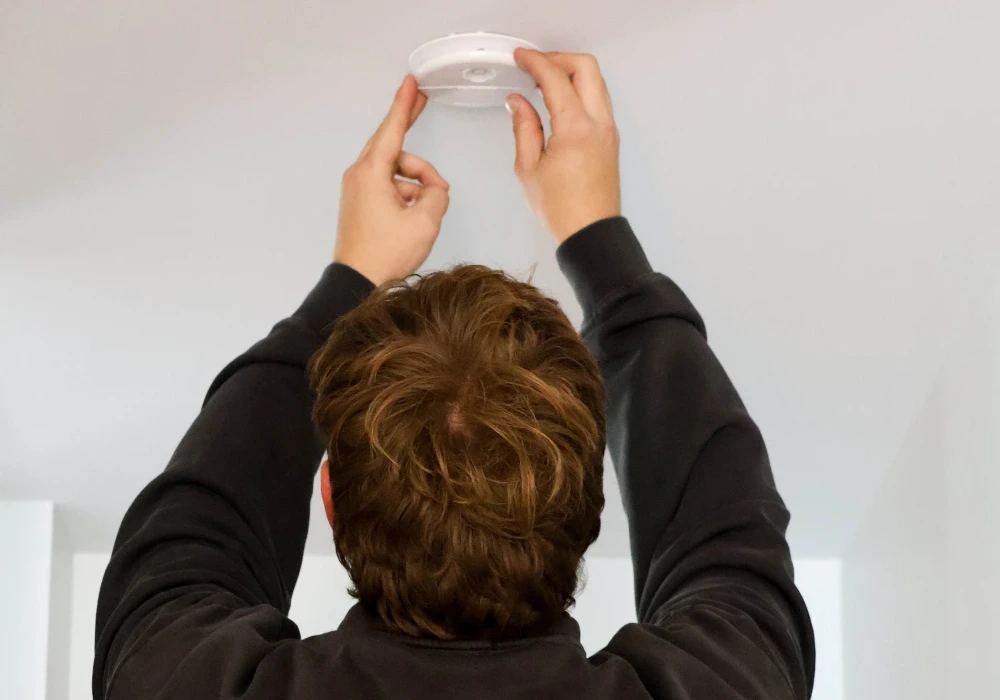
Common electrical mistakes homeowners make in a Newcastle or Hunter home often involve unlicensed DIY electrical work, ignored warning signs, or an overloaded power board or power point.
If you are adding appliances, chasing a warning sign, or planning a change to the wiring in Newcastle, Lake Macquarie or the Hunter, a residential electrician in Newcastle should be involved before the work goes further.
Doing electrical work yourself
NSW Government advice is that “You must have an electrical licence before undertaking any electrical wiring work in NSW, regardless of the cost or type of work.” You can read that on the NSW Government page about electricians in NSW. That licence rule is the starting point for electrical safety in a home, and it applies regardless of how small the job looks.
Replacing a power point, a light switch, a light fitting, a ceiling fan, or any wiring is licensed work. Electrical wiring mistakes happen when that work is treated as a homeowner job. Unless you are a qualified electrician, NSW Government advice is that you should never “carry out any electrical maintenance other than changing a light globe.” You can read that guidance on the NSW Government page about electrical safety in the home. Changing a light globe is the exception. NSW Government advice is that you should never attempt to wire any part of your property, or to install, replace or move power points, lights and switches, or to install or replace ceiling fans, unless you are a qualified electrician.
Illegal DIY electrical work can create electrical hazards, including the risk of shock or electrocution, and fire hazards. When repairs are needed, they belong with a licensed electrician too. Planning the layout with your electrician is not DIY electrical work.
Lighting and wiring, including a lighting upgrade, should be left to a licensed electrician.
Ignoring warning signs, and getting out first
Flickering lights, a warm switch, a crackling or discoloured power point, buzzing, or a burning smell can be electrical hazards. Electrical safety in the home starts with taking those signs seriously, even when the house still seems to be working as normal.
If there is smoke, flame, a strong burning smell, heat or sparking, get out first, then call Triple Zero 000 from a safe location. Do not stay to investigate, unplug items, or start flipping switches. Fire and Rescue NSW says a water extinguisher must never be used on any fire involving electrical equipment. Do not throw water on it either. NSW Government advice is to “Escape as quickly as possible and call 000.” You can read the Fire and Rescue NSW page on emergencies and the NSW Government page on keeping your home fire safe. Once you are out, stay out and give the operator your address from that safe location. Fire and Rescue NSW also notes that calls to Triple Zero 000 are free and can be made from mobile phones, home or work phones or pay phones.
If you have a burning smell but no sign of fire, see what an electrical fire smells like. If the smell is at the switchboard, see a burning smell from the switchboard. For flickering lights or a hot power point with no sign of fire, see why lights flicker and signs a power point needs replacing. In those cases, call a licensed electrician rather than waiting to see if the sign goes away.
Overloading power points, power boards and double adaptors
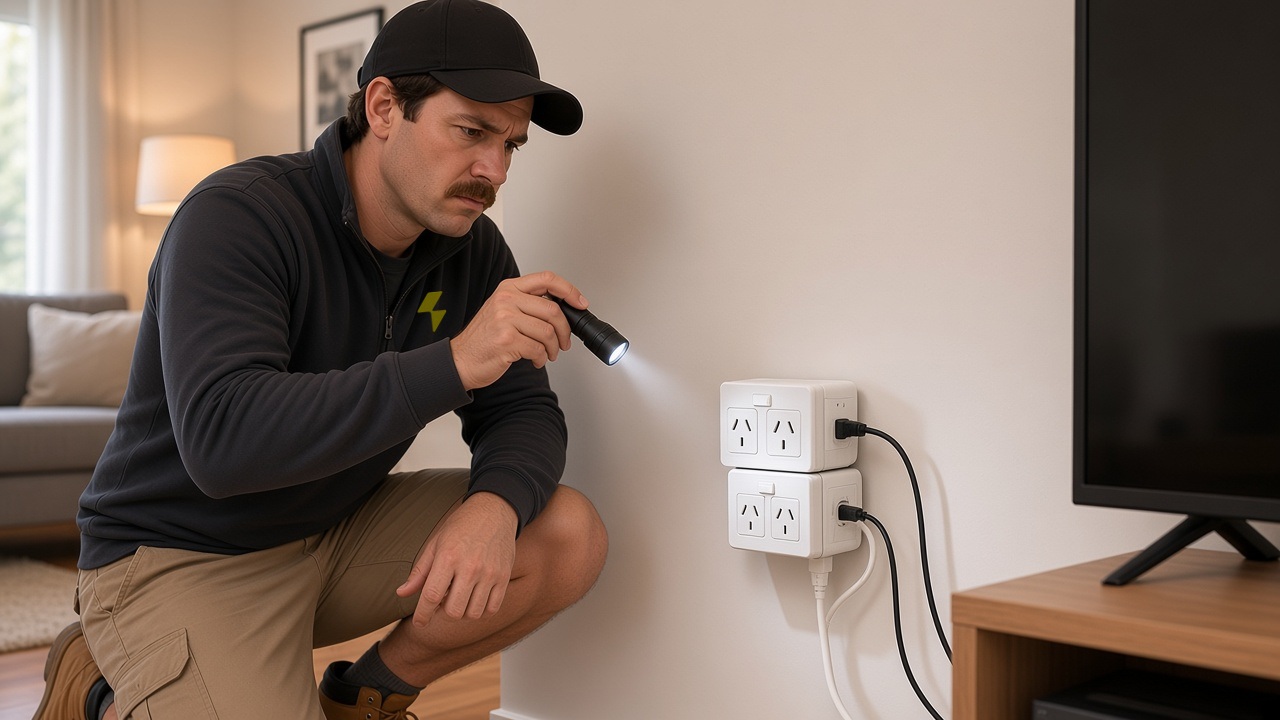
An overloaded power board, stacked double adaptors, or a tangle of extension leads on one power point is one of the common electrical mistakes homeowners make. Fire and Rescue NSW says: “Poor maintenance and incorrect usage of power boards can result in home and office fires.” The same page notes: “Statistics show that over 350 residential house fires are started by electrical faults in NSW each year.” Problems can arise from “Overloading the power board.” Fire and Rescue NSW also says: “Remember do not overload the power board.” The fire services “recommend only using power boards with built in safety switches/circuit breakers,” and that you regularly inspect power boards and leads for signs of damage. You can read that guidance on the Fire and Rescue NSW page about electrical power boards.
The same Fire and Rescue NSW advice includes placing power boards on their sides to help prevent dust building up in unused points, checking that plugs are firmly in place, and giving the board enough ventilation. Heavy plug-in transformers can also tip a board and leave a plug only partly in, which the same page links to overheating from a poor connection. If a board or lead is damaged, talk to a licensed electrician.
If the household is relying on power boards or double adaptors in every room, the next step is a licensed electrician, not another adaptor. Extra power points, or a change to how the circuits are used, is licensed work. A damaged or loose power point should be checked too; see signs a power point needs replacing.
Trying to fix a tripping breaker yourself
A breaker that keeps tripping is a warning, not a part to replace with a higher rating. Changing a breaker, working in the switchboard, or flipping breakers one at a time to find a fault is licensed work.
If a breaker keeps tripping, leave the diagnosis to a licensed electrician. Do not fit a higher-rated breaker so the circuit stays on. You can read about why a circuit breaker keeps tripping.
Putting off switchboard, safety-switch or inspection issues
An older ceramic fuse board, a switchboard without safety switches, or a safety switch that is never tested, can be part of the problem. Safety switches should be tested every three to six months, in line with NSW guidance. A licensed electrician can also check whether the switchboard still suits the way the house is used, and whether safety switches are fitted to the circuits that need them.
We only replace switchboards if they pose a significant safety risk due to age or wear. You can read about a switchboard upgrade in Newcastle and how often to get a home electrical inspection. An inspection is a chance for a licensed electrician to look at the switchboard, the fittings and any warning signs that have already shown up.
When the work is done, you receive a Certificate of Compliance for Electrical Work (CCEW).
Starting a renovation without a licensed electrician
Bring a licensed electrician in before the plasterboard goes back, so the wiring, power points and lighting can be planned while the walls are open. A kitchen, bathroom or lighting change is often the moment this comes up, because those rooms may need new power points, fans or circuits while the structure is still open. Leaving that conversation until the walls are closed usually means opening them up again, or living with a layout that does not have enough power points for how the rooms are used.
See what a home renovation electrician in Newcastle does and how to prepare your home for an electrical renovation.
Call Insight Electrical about electrical safety in your Newcastle home
Insight Electrical is a Newcastle electrician with over 40 years of combined experience, working across Newcastle, Lake Macquarie and the Hunter from our base in Redhead. Book a residential electrician in Newcastle, or talk to us about electrical maintenance in Newcastle. Call us for a free quote. We provide emergency call-out services during operating hours and will always do our best to assist.
Call Insight Electrical on 0468 043 743, Monday to Friday, 7am to 5pm, or contact Insight Electrical online.
Frequently Asked Questions
What are common electrical mistakes homeowners make?
Common electrical mistakes homeowners make include illegal DIY electrical work, ignored warning signs and overloaded power boards or power points.
Can I do any electrical work myself in NSW?
In NSW, you must have an electrical licence before undertaking any electrical wiring work, regardless of the cost or type of work. The only electrical maintenance a homeowner may do themselves is changing a light globe.
Can I use power boards and double adaptors?
Do not overload the power board. Fire and Rescue NSW warns that poor maintenance and incorrect usage of power boards can result in fires, and the fire services recommend only using power boards with built in safety switches or circuit breakers. Power boards and double adaptors are not a substitute for enough power points.
When should I get a switchboard upgrade?
We only replace switchboards if they pose a significant safety risk due to age or wear. A licensed electrician can assess the board and talk through a switchboard upgrade in Newcastle.