




If you manage an office, shop, café, clinic or workshop, electrical maintenance is one of those jobs that’s easy to put off until something stops working. A tripped circuit takes out the point-of-sale on a Saturday morning, the emergency lights fail their test, or an insurer asks when the switchboard was last checked and nobody’s sure.
The short answer: a commercial electrical maintenance checklist should cover your switchboards and distribution boards, safety switches (RCDs), emergency and exit lighting, test and tag of portable equipment, wiring and fittings, and general lighting, with each item checked at the interval set by the relevant Australian Standard and the risk level of your workplace.
At Insight Electrical, we’re a family-owned business based in Redhead, with 40+ years combined experience looking after homes and businesses across Newcastle, Lake Macquarie and the Hunter. We plan maintenance around your trading hours, fix what can be fixed, and only recommend replacing equipment when it’s a genuine safety risk or no longer fit for purpose. You can read more about our commercial electrical services in Newcastle.
Why Commercial Electrical Maintenance Matters
Electrical faults in a commercial building don’t just mean a callout. They can shut down trading, damage stock and equipment, and put staff and customers at risk. Under NSW work health and safety laws, businesses must manage electrical risks in the workplace, and that includes keeping electrical equipment and installations safe.
Regular maintenance also helps with insurance, leasing and fire safety obligations. Many commercial buildings list emergency lighting as one of the essential fire safety measures on their annual fire safety statement, so those tests need to be done and recorded.
If you’re not sure whether your system needs maintenance or a bigger rethink, our post on the signs your commercial electrical system needs an upgrade is a good place to start.
Your Commercial Electrical Maintenance Checklist at a Glance
- Switchboards and distribution boards: a visual check every 6 to 12 months.
- Thermal imaging of switchboards: every 12 months for most sites.
- Safety switches (RCDs): a push-button test every 3 to 6 months, and a trip-time test by an electrician every 12 months for most sites.
- Emergency and exit lighting: an inspection and discharge test every 6 months.
- Test and tag of portable equipment: from every 3 months to every 5 years, depending on the environment.
- Wiring, power points and fittings: a visual check every 12 months.
- General lighting: checked as part of each service.
These are general guides. The right interval for your site depends on the type of business, the environment and any requirements from your insurer, landlord or strata.
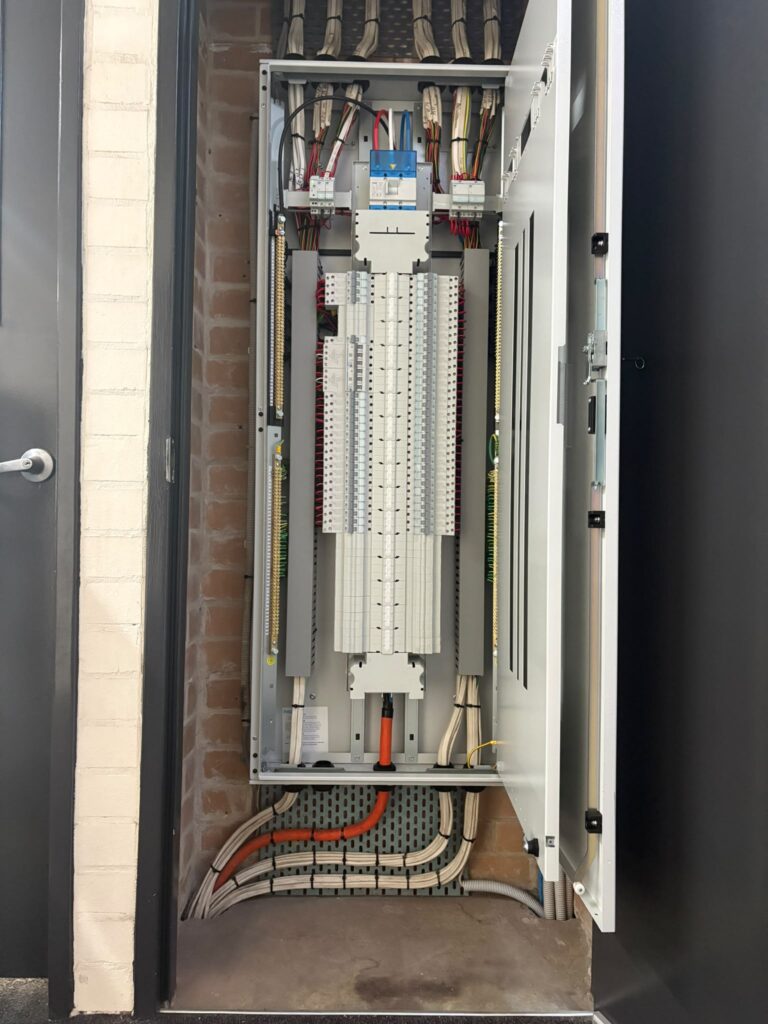
7 Items Every Commercial Maintenance Checklist Should Cover
1. Switchboards and distribution boards
Your switchboard is the heart of the building’s electrical system. We check for loose connections, signs of heat, damaged breakers, corrosion and moisture, and make sure every circuit is clearly labelled so staff can isolate power quickly in an emergency.
We also look at capacity. Many older commercial buildings have had fit-out after fit-out added to the same board, and it’s common to find boards running close to their limit.
If a switchboard is hot to touch, buzzing loudly, smells like burning or shows scorch marks, keep staff clear and call a licensed electrician straight away. If there’s smoke or fire, evacuate and call 000. Our posts on a burning smell from a switchboard and a buzzing electrical panel explain what these signs can mean.
2. Thermal imaging
A thermal imaging camera shows hot spots in switchboards, connections and cables that you can’t see with the naked eye. It’s one of the simplest ways to catch a loose or overloaded connection before it fails, and it’s done with the board live, so there’s no shutdown.
3. Safety switches (RCDs)
Safety switches cut the power in a fraction of a second if current leaks to earth, such as through a faulty appliance or a person. They need to be tested regularly: a push-button test to check they trip, and a trip-time test by an electrician to check they trip fast enough. Workplaces with hostile environments, such as workshops, kitchens and construction areas, need closer attention.
Our post on the difference between a safety switch and an RCD explains how they work.
4. Emergency and exit lighting
Emergency and exit lights help people find their way out if the power fails. Under AS/NZS 2293.2, they need to be inspected and discharge tested every six months, with the results recorded in a logbook. Batteries and fittings that fail are replaced, and many businesses take the chance to switch to LED emergency fittings, which use less power and last longer.
5. Test and tag
Portable electrical equipment, like computers, kettles, power boards, extension leads and power tools, should be inspected, tested and tagged under AS/NZS 3760. How often depends on the environment. Construction sites and workshops need much more frequent testing than a quiet office.
6. Wiring, power points and fittings
We check power points, switches, light fittings and accessible wiring for damage, loose fittings, overheating and overloaded power boards. In busy retail and hospitality spaces around Broadmeadow and Charlestown, damaged power points and daisy-chained power boards behind counters are some of the most common things we find.
If you’re adding workstations, POS terminals or network gear, our team can also look after data cabling at the same time.
7. General lighting
Lighting affects safety and how a space feels for staff and customers. We replace failed lamps and fittings, check for flicker and heat damage, and can quote on energy-efficient LED lighting upgrades that cut running costs.
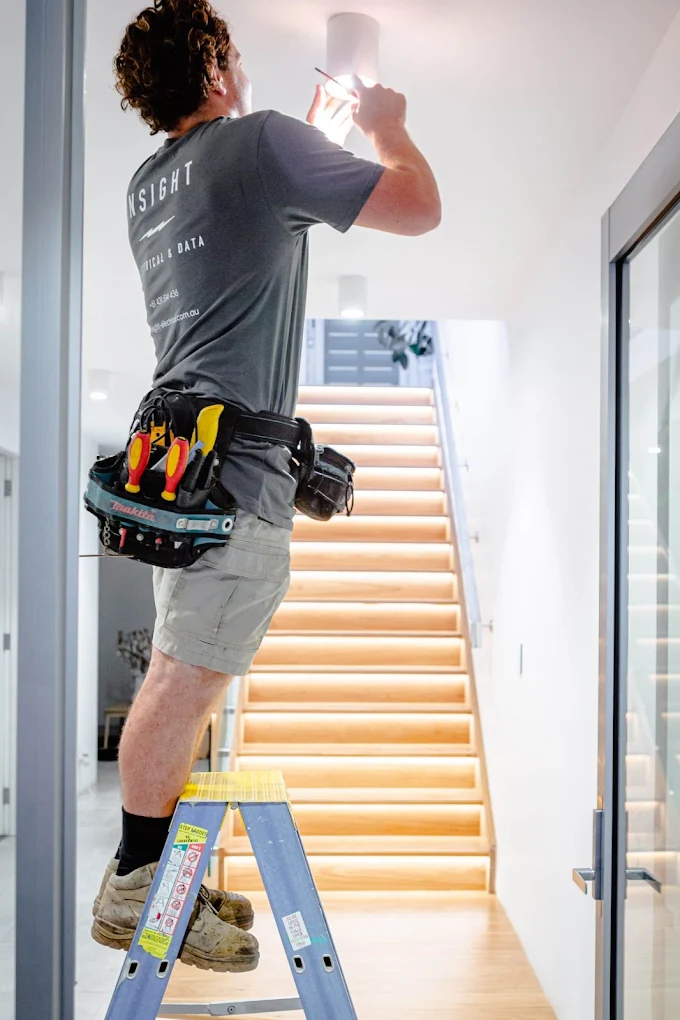
How to Plan Your Electrical Maintenance
- Keep a register of your switchboards, RCDs, emergency lights and tagged equipment, with dates of the last and next test.
- Book maintenance outside peak trading where possible. Early mornings, evenings or quieter days keep disruption down.
- Group tasks together, such as emergency lighting tests and RCD testing, so they’re done in one visit.
- Keep the paperwork. Test results, logbooks and Certificates of Compliance are what insurers, landlords and fire safety certifiers ask to see.
- Fix issues early. A loose connection or a failed emergency light is cheap to fix now and expensive to ignore.
What We’d Do on a Commercial Maintenance Visit
- We start with a walk-through to understand your site, trading hours and any existing maintenance records.
- We test and inspect the items on your checklist and record the results.
- We explain what we found, what’s urgent and what can wait, in plain English.
- We repair what can be repaired and only recommend replacing equipment when it’s unsafe or no longer up to the job.
All our work follows AS/NZS 3000, the Australian wiring rules, along with the relevant standards for each item, and new electrical work comes with a Certificate of Compliance.
One client who uses us for rental and strata property maintenance told us: “Communication is excellent, jobs are completed efficiently and within the expected timeframes, and the quality of their workmanship is consistently high.”
Wondering what a maintenance plan costs? Pricing depends on several factors, including the size of your site and how many items need testing, so call us to talk through your building. If you’re comparing electricians, our guide to hiring a licensed commercial electrician covers what to look for.
Frequently Asked Questions
How often should commercial electrical maintenance be done?
Most commercial sites should have a general electrical check at least every 12 months, with emergency lighting tested every six months and RCDs and portable equipment tested at intervals that suit the risk level of the workplace.
Do emergency lights need to be tested?
Yes. Under AS/NZS 2293.2, emergency and exit lights need to be inspected and discharge tested every six months, with the results recorded.
Is test and tag a legal requirement in NSW?
NSW work health and safety laws require businesses to manage electrical risks. Testing and tagging under AS/NZS 3760 is the common way to show portable equipment has been checked, and it’s required for some workplaces, such as construction sites and other hostile environments.
Can maintenance be done outside business hours?
Yes. We plan maintenance around your trading hours wherever we can, so your business keeps running.
Who can carry out commercial electrical maintenance?
Any work on fixed wiring, switchboards or emergency lighting must be done by a licensed electrician. Insight Electrical holds NSW contractor licence 297041C.
Book Commercial Electrical Maintenance With Insight Electrical
Whether you need a one-off check or a regular maintenance plan for your office, shop or workshop, we’ll work around your business and keep you up to date on what’s been done.
Call Insight Electrical on 0468 043 743 (Monday to Friday, 7am to 5pm), or contact our Newcastle electricians online. You can also read more about our electrical maintenance services in Newcastle.