



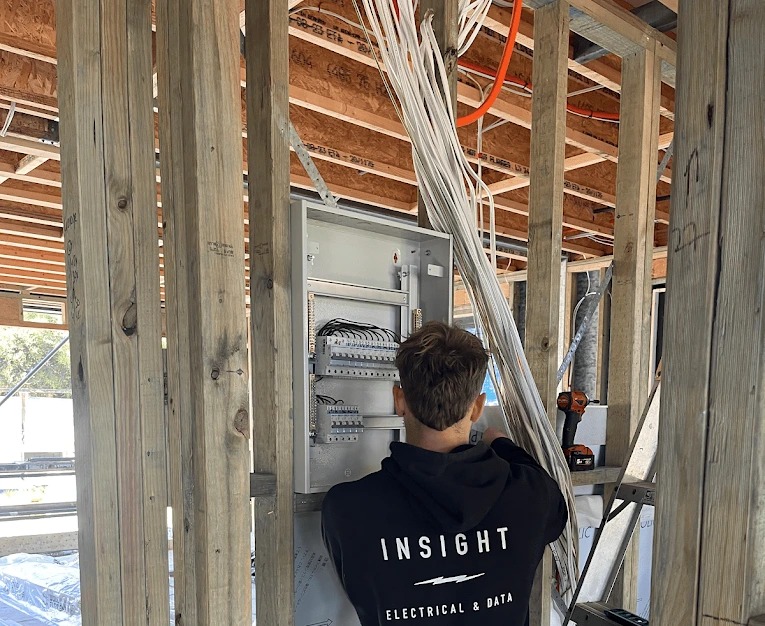
A faint, steady hum from your switchboard can be normal, but switchboard buzzing that is new, loud, crackling or comes with heat or a burning smell is a warning sign that needs a licensed electrician. The most common causes are:
- A loose connection inside the board
- A circuit overloaded by air con, heaters or other big appliances
- Circuit breakers or safety switches that are wearing out
- Arcing, which sounds like crackling or sizzling and is a fire risk
In Newcastle and Lake Macquarie homes, it often starts when air con is added to an older board, or when a quiet board suddenly makes a buzzing noise. Whether you call it a switchboard, a circuit breaker panel or an electrical panel, the rule is the same: if the sound is new or worrying, have it checked.
Is it normal for a switchboard to buzz or hum?
Sometimes, yes. A humming switchboard isn’t automatically a fault, because a few devices in or near the board make a little noise while they work:
✓ Contactors and relays: the device that switches your off-peak hot water or other controlled load can hum or clunk when it turns on.
✓ Timers and time switches: these can tick or hum quietly.
✓ The electricity meter: some meters, and smart-meter relays, make a faint sound.
✓ Low-voltage transformers: a doorbell or garden lighting transformer, where your home has one, can give off a soft hum.
The circuit breakers, safety switches and the main switch themselves should be silent. If a faint hum has always been there, hasn’t changed and nothing feels warm, it’s usually fine. A switchboard buzzing sound that is new, louder than before or coming from one breaker is a different story.
One quick check: if the noise is coming from a powerboard on the floor rather than the electrical switchboard on the wall, unplug what’s on it and have the powerboard replaced. That’s a different problem from the switchboard itself.
What does a buzzing or humming switchboard usually mean?
If you’re wondering why your switchboard is buzzing when it never used to, the cause is usually one of the following. Only a licensed electrician should open the board to find out which.
Loose connections
Every cable in your board is held in place by a screw terminal. Heating and cooling, vibration and age can loosen those terminals over time. A loose connection makes poor contact, and that causes electrical buzzing, heat and, in the worst case, arcing. Tightening or remaking the connection is often the fix.
Overloaded circuits
A circuit carrying more current than it was designed for can make the breaker and cable run hot and hum. It’s common in established suburbs. In older Newcastle homes, some switchboards can be close to their limit with today’s appliances. If a breaker keeps tripping as well, our guide on why a circuit breaker trips goes through the causes.
A failing circuit breaker or safety switch
Circuit breakers and safety switches (RCDs) wear out. A worn device can hum or buzz before it trips, run warm, or fail to trip when it should. Circuit breaker buzzing that comes from one device usually means that device needs testing and possibly replacing. If you’re not sure which is which, here’s the difference between a safety switch versus a circuit breaker.
Arcing and crackling
Arcing is electricity jumping across a gap, usually at a loose or damaged connection. It sounds like crackling, popping or sizzling rather than a steady hum, and it’s a fire risk. If you hear it, follow the steps further down and call an electrician straight away.
Older ceramic-fuse boards and modern loads
Plenty of older Newcastle homes still have boards where each circuit is protected by a ceramic fuse instead of a circuit breaker. In Waratah, for example, a ceramic fuse board and no earth leakage protection was normal for a long time. A fuse box isn’t automatically unsafe, but it was built for far less than most households use today. If yours buzzes, get it checked. Near the coast at Merewether or Redhead, salt air can also corrode terminals in meter boxes on outside walls, which leads to heat and noise.
Here’s a quick guide to what different sounds can mean:
| Sound | Likely cause | What to do |
|---|---|---|
| Faint, steady hum that’s always been there | Contactor, timer, meter or a doorbell transformer working normally | Usually fine. Mention it at your next electrical check. |
| Loud chatter or clicking after a power outage | Contactor, relay or smart-meter relay struggling to switch | Book a licensed electrician soon. |
| New or louder buzzing | Loose connection, overloaded circuit or a worn breaker | Turn off big appliances and book an electrician promptly. |
| Crackling, popping or sizzling | Arcing at a loose or damaged connection | Treat as urgent. Keep clear and call an electrician. |
| Any noise with heat, a burning smell, smoke or scorch marks | Overheating or arcing inside the board | Emergency. Turn off the main switch only if it’s safe, and call 000 if there’s smoke or fire. |

What should you do if your switchboard is buzzing?
If your switchboard starts buzzing, work through these steps in order. None of them involve opening the board.
- Don’t take the cover off or touch the wiring. Work inside the board is electrical work, and in NSW it has to be done by a licensed electrician.
- Look and smell, without touching. Check for a burning or fishy smell, smoke, scorch marks, melted plastic or discolouration, and whether the cover feels hot when you hold your hand near it.
- Turn off large appliances like the air con, oven, heaters and dryer, then listen again. Note whether the sound changes.
- If there’s burning, sparks or smoke, turn off the main switch only if you can reach it safely, keep everyone clear and call 000 if there’s smoke or fire.
- Book a licensed electrician for any new or persistent buzz, even if it seems to settle down.
If your neighbours have lost power too, or the problem seems to be on the supply side, report it to Ausgrid on 13 13 88. For a noise inside your own board, call an electrician.
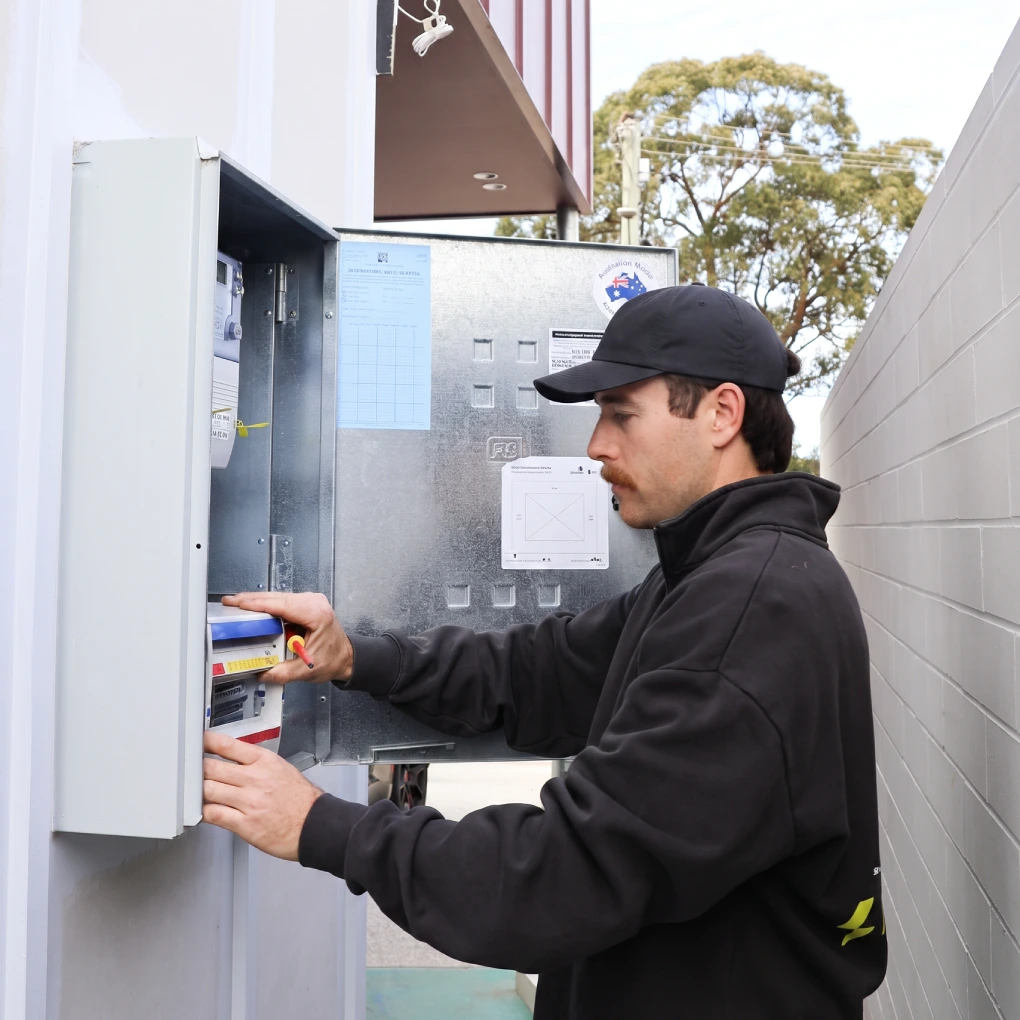
When is a buzzing switchboard an emergency?
Treat it as an emergency if the buzzing comes with any of these:
✓ Heat: the cover, a breaker or the main switch feels warm or hot.
✓ Smell: a burning, hot plastic or fishy smell. Our guide to a burning smell from the switchboard explains what to do next.
✓ Smoke or sparks: get everyone out and call 000.
✓ Scorch marks or melted plastic on or around the board.
✓ Flickering: lights dimming or flickering at the same time. Our post on flickering lights covers the other causes.
✓ Repeated tripping: a breaker or safety switch that keeps tripping or won’t reset.
We provide emergency call-outs during business hours and will always do our best to help.
Why does my switchboard buzz at night?
Switchboard buzzing at night is often linked to off-peak hot water. Many homes have a controlled load that switches on overnight, and the contactor or ripple-control relay that turns it on can hum or clunk as it switches. Because the house is quiet, you notice it more.
A single soft clunk and a quiet hum at the same time each night is usually normal. Loud, rapid chattering is not, and it often shows up after a power outage when a contactor or smart-meter relay struggles to switch cleanly. If the sound is loud, keeps going or comes with heat, have it checked.
Does a buzzing switchboard mean I need an upgrade?
Not always. Sometimes the fix is as simple as tightening a connection or replacing one worn breaker. Other times the board is old, damaged or at its limit, and a switchboard upgrade is the safer long-term fix.
We only replace switchboards if they pose a significant safety risk due to age or wear. If a circuit can be repaired, we repair it. If it genuinely needs replacing, we show you why. After any work inside the board, you receive a Certificate of Compliance for Electrical Work (CCEW).
If you’re weighing it up, read the signs you may need a switchboard upgrade, what affects the cost of a switchboard upgrade and how long a switchboard upgrade takes. Regular electrical maintenance in Newcastle can also catch loose connections before they start to buzz.
Frequently asked questions
Is it normal for a switchboard to be buzzing?
A faint, steady hum from a contactor, timer or meter can be normal. Buzzing that is new, loud, crackling, or comes with heat or a burning smell is not, and a licensed electrician should check it.
Why is my switchboard making noise?
The usual causes are a loose connection, an overloaded circuit, a worn circuit breaker or safety switch, or arcing. If you’ve heard it called a breaker box buzzing, it’s the same thing: the switchboard needs a licensed electrician to find the cause.
Why does my switchboard buzz at night?
Off-peak hot water and other controlled loads often switch on overnight, and the contactor that turns them on can hum or clunk. A quiet, regular sound is usually normal. Loud chattering or a buzz with heat needs checking.
Should I turn the power off if my switchboard is buzzing?
Only if there are danger signs like burning, sparks, smoke or heat, and only if you can reach the main switch safely. Otherwise, turn off large appliances and book a licensed electrician. Call 000 if there’s smoke or fire.
Can I fix a buzzing switchboard myself?
No. In NSW, electrical work must be done by a licensed electrician, and that includes anything inside the switchboard. You can turn off appliances and look for warning signs, but don’t take the cover off.
Book a switchboard check with Insight Electrical
If your switchboard is buzzing, humming louder than usual or running warm, let us take a look. Our licensed electricians work across Newcastle, Lake Macquarie and the Hunter from our base in Redhead. We’ll find the cause, explain what we found and tell you honestly whether a repair will do. We’re punctual and we respect your time.
Call Insight Electrical on 0468 043 743 (Monday to Friday, 7am to 5pm) or contact Insight Electrical online. You can also read more about our switchboard upgrade in Newcastle service.