



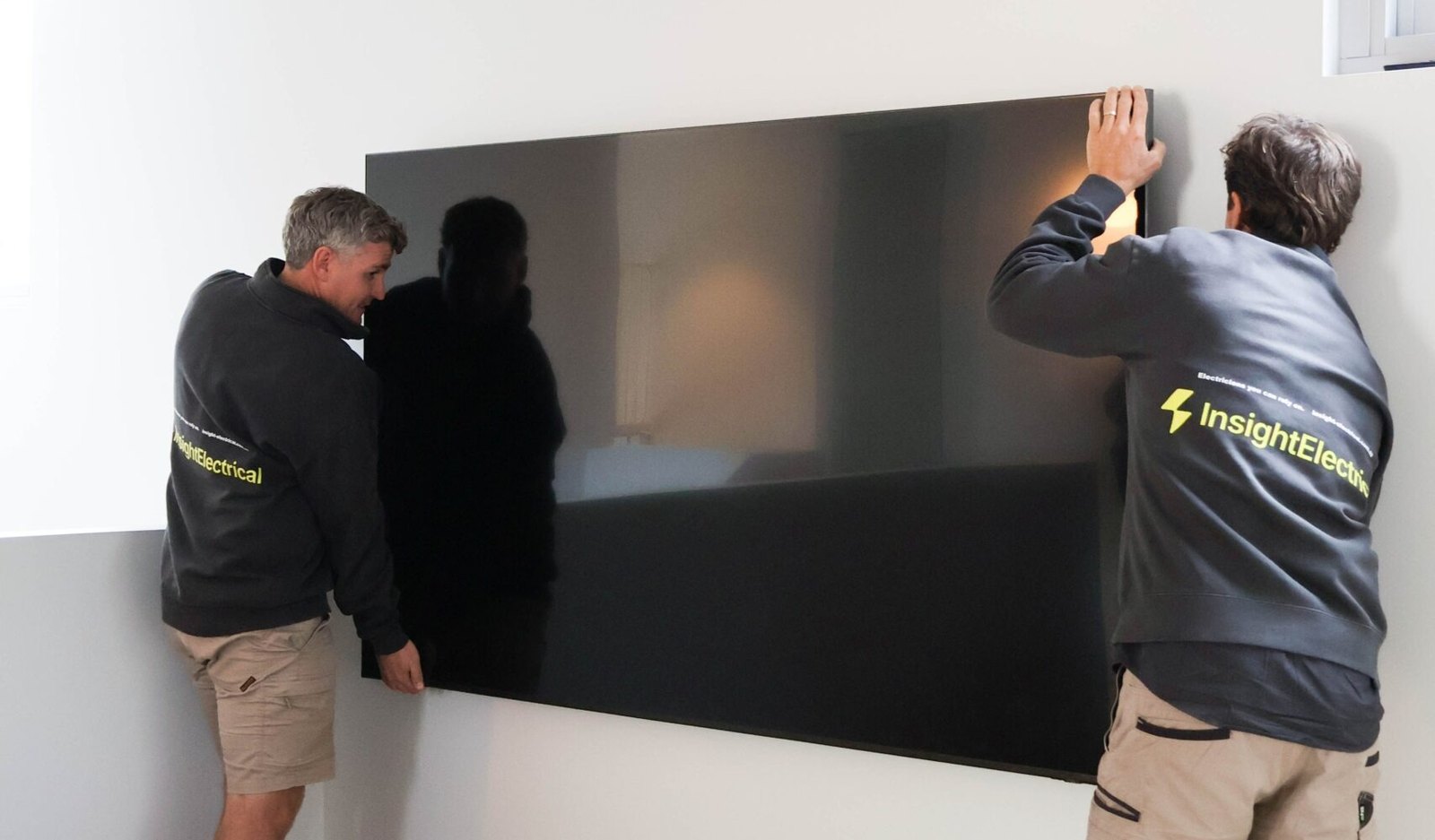
Maybe the picture keeps freezing halfway through the footy. Maybe you’ve moved into a new home with no aerial at all. Or maybe you’re wondering whether you need one now that so much of what you watch is streamed.
A professional TV antenna installation, also called a TV aerial installation, is how most Newcastle homes receive free-to-air TV. A technician assesses your signal, fits the right digital TV antenna, runs the cabling to your TV points and tunes your set so you get a stable picture. On a typical home, the job often takes a few hours.
Insight Electrical is based in Redhead and installs TV antennas across Newcastle, Lake Macquarie and the Hunter. Below, we cover when you still need an antenna, what the job involves, what affects the cost and when to leave it to a professional. If you already know you need one, you can book TV antenna installation in Newcastle with our team.
Do you still need a TV antenna?
For most Newcastle households, yes, if you want free-to-air channels without depending on the internet.
An antenna picks up the Freeview channels broadcast over the air: ABC, SBS, Seven, Nine and Ten, plus their sister channels. Streaming apps such as ABC iview, SBS On Demand, 7plus, 9Now and 10play carry a lot of the same content, and they work well when your NBN connection is solid. But an aerial gives you a few things streaming can’t:
✓ It keeps working when the internet drops: handy during a storm, an NBN outage or a night when everyone in the house is online at once.
✓ It doesn’t use your data: live sport and the evening news come in over the air.
✓ One aerial can feed several TVs: the lounge room, the bedrooms and the outdoor entertaining area can all run off the same antenna.
Good TV reception also depends on where you live. Before you book anything, put your address into the Australian Government’s mySwitch tool. It shows which transmitter serves your street and what signal to expect, which is the starting point for any installer.
If you’re weighing up an antenna against a satellite dish, a dish is mainly for places the land-based signal doesn’t reach well. Where mySwitch shows good coverage, a standard digital TV antenna is usually all you need for free-to-air.
More screens also mean more planning. A home office with wall-mounted screens, a TV in the main bedroom and another in the rumpus room all need a clean signal, and that comes down to the antenna and the cabling behind the walls.
What TV antenna installation involves
A proper digital TV antenna installation is more than bolting an aerial to the roof. Here’s what a typical job looks like:
- Onsite assessment: the installer looks at your roof type and height, checks the signal at your address and confirms how many TV points you need.
- Antenna selection: choosing the right antenna for your area. Most digital channels are broadcast on UHF, some areas also use VHF, and a weak-signal area may need a higher-gain antenna than a home close to the transmitter.
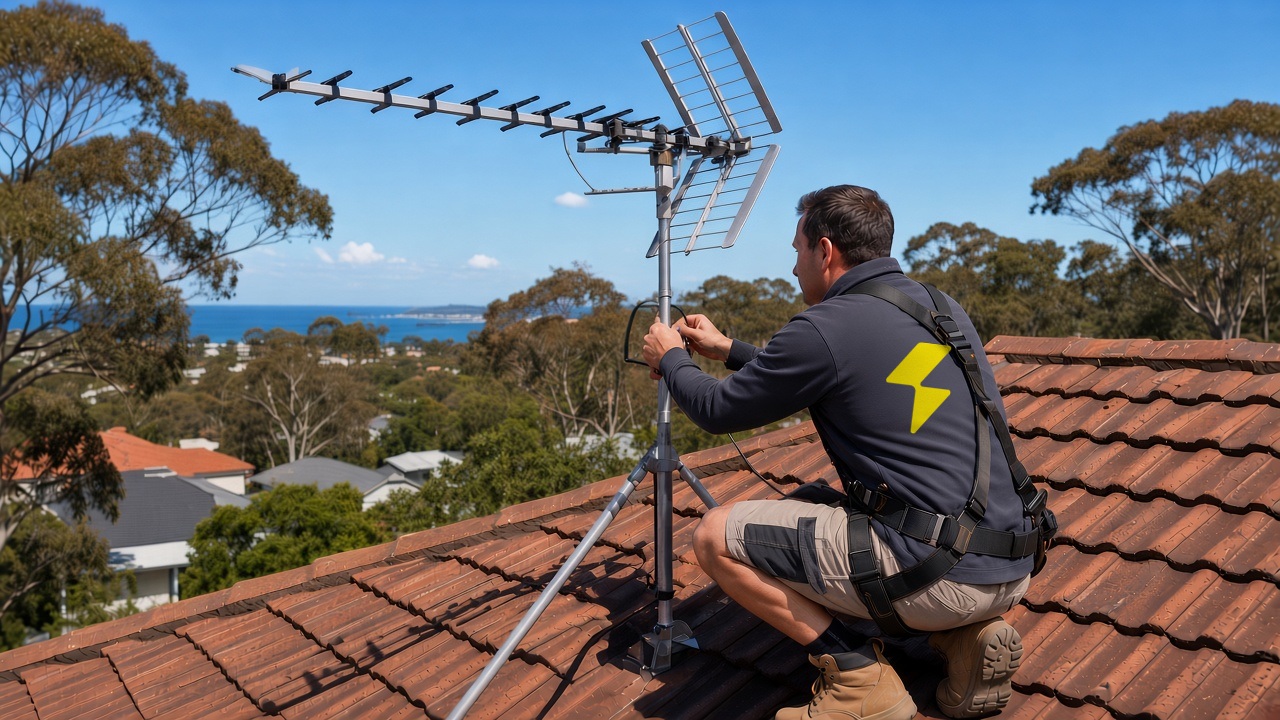
- Mounting: the antenna goes on a bracket or mast on the rooftop, fixed firmly enough to cope with strong winds.
- Cabling: quality RG6 coaxial cable runs from the antenna to each wall TV point.
- Alignment: the antenna’s orientation is adjusted so it points at the right transmitter for the strongest, cleanest signal.
- Testing and tuning: the signal is checked at each point, then your TVs are scanned so every channel comes in.
New TV points are often part of the job, especially if you’re adding a TV to a bedroom or patio or mounting one on the wall. Our team also handles TV point installs and repairs, wall mounts and home theatre set-ups. If you’re cabling the house for internet at the same time, it can make sense to plan the data cabling together. If you’re not sure whether electricians can do data cabling, that guide explains it.
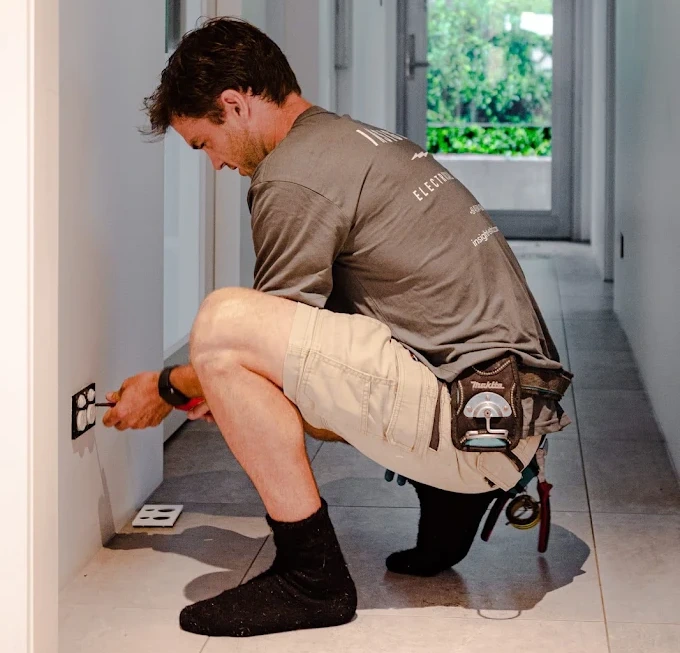
How long does it take? In general, installing a TV aerial takes between 2 and 4 hours. If you live near a TV transmitter and only need an indoor aerial, it may only take about an hour.
Indoor aerials vs a rooftop digital TV antenna
An indoor antenna sits near the TV and can work well in a unit or a home close to the transmitter with a strong signal. It’s quick to set up, but walls, other electronics and people moving around the room can all affect the picture.
An outdoor antenna on the roof sits higher and clear of obstacles, so it’s the reliable choice for most houses, particularly where hills or tall trees sit between your home and the transmitter. In some homes an attic antenna can go in the roof cavity, out of the weather. It only suits strong-signal areas, because tiles, sarking and metal roofing all weaken the signal.
What affects TV antenna installation cost
There’s no single TV antenna installation price, because no two homes are the same. These are the factors that move the price up or down:
✓ New install or changeover: replacing an old antenna on an existing mount and cable is usually simpler than starting from scratch on a new home.
✓ Number of TV points: each extra wall point adds cabling and labour.
✓ Cable length: a long run from the roof to a back bedroom or granny flat takes more cable and more time.
✓ Single or double storey: a two-storey home or a steep roof takes more time and safety gear to work on.
✓ Signal strength: a weak-signal site may need a higher-gain antenna, a taller mast or a signal booster.
✓ Roof type and access: tile, metal and steep roofs each need a different fixing method.
✓ Coastal sites: in beachside suburbs like Redhead, Merewether and Swansea, salt air and wind are hard on fittings, so the mount and connections need good weatherproofing.
If you’re adding TVs, it’s usually more efficient to run the extra points during the antenna job than to have someone come back later.
When you compare a TV aerial installation cost online, you’ll see “from” prices advertised by big retailers and franchises. Those usually cover a basic job, often without the antenna itself, a long cable run or extra points, so read the fine print.
As a general guide, a standard TV antenna installation in Australia typically ranges from around $150 to $700, depending on your roof type, the number of TV points and how complex the installation is.
Insight Electrical offers a free, no-obligation quote, so you know the price before any work starts.
Signal boosters and more than one TV
One antenna can run several TVs. The signal is split to each TV point, but every split weakens it a little, so a house with four or five points may need help.
That’s where an amplifier comes in. A masthead amplifier, also called an antenna booster, lifts the signal so each TV still gets a clean picture. A TV antenna booster won’t fix everything, though. If the antenna is pointed the wrong way or the antenna cable is old and damaged, boosting the signal also boosts the problem.
That’s why a good installer tests the signal first and only adds a booster when the readings call for one. Insight Electrical installs antenna signal boosters for homes in weak-signal areas and for households running several TVs.
Can you install a TV antenna yourself?
You can buy an aerial from a hardware store, including a Bunnings-style DIY kit, but most households are better off with a professional installer. A store-bought antenna still needs to be mounted securely, pointed at the right transmitter, weatherproofed and cabled cleanly, and that means working at height on your roof.
DIY antenna jobs are where a lot of reception problems start: an aerial pointed slightly off, a loose connector, or cheap cable that lets water in. A cheaper aerial still fails if it’s poorly mounted or aimed the wrong way.
There are a few safe checks you can do yourself before calling anyone:
- Check the cable is pushed firmly into the TV and the wall plate.
- Make sure your TV has a digital tuner, or use a set-top box.
- Run a channel scan (auto-tune) from your TV’s menu.
If that doesn’t fix it, or the job involves the roof, a new antenna or new cabling, call a professional.
How to choose a TV antenna installer
A good installer is the difference between a picture that holds up in a southerly and one that drops out every time the wind picks up. Look for:
✓ Licence and insurance: ask about both, especially for work on the roof.
✓ A clear quote: it should spell out the antenna, cabling, TV points and any booster.
✓ Testing and tuning included: the job isn’t finished until every TV is tuned and the signal is checked at each point.
At Insight Electrical, our TV antenna installers are professionals with certification, and we offer free, no-obligation quotes. Our services are often available the next day.
We also work as a residential electrician in Newcastle and look after electrical maintenance, so if your new TV wall or home theatre needs extra power points, we can quote for that at the same time.
Frequently asked questions
How much does it cost to install a TV antenna?
It depends on whether it’s a new install or a changeover, how many TV points you need, the length of the cable run, your roof and number of storeys, and whether your area needs a signal booster. Insight Electrical gives free, no-obligation quotes, so you know the price before work starts.
How long does TV antenna installation take?
Installing a TV aerial generally takes between 2 and 4 hours. An indoor aerial in a home near a TV transmitter may only take about an hour.
Can you install a TV antenna yourself?
You can do simple checks, like making sure the cable is firmly connected and running a channel scan. Anything on the roof, aligning the antenna or running new cable is a job for a professional installer.
Do I still need a TV antenna if I stream my programmes?
You don’t need one for streaming apps, but an antenna gives you free-to-air channels without using data, keeps working if the internet drops and can run several TVs from one aerial.
Can one TV antenna run more than one television?
Yes. The signal is split to each TV point. In homes with several TVs or a weaker signal, a masthead amplifier may be needed so every TV gets a clear picture.
Talk to Insight Electrical about TV antenna installation
Whether you’re setting up a new home in the Hunter, replacing an old aerial in Lake Macquarie or chasing a better picture in Newcastle, we can help. We’ll check your signal, recommend the right setup and give you a clear quote before any work starts.
Call Insight Electrical on 0468 043 743 (Monday to Friday, 7am to 5pm), or send us a message. You can also read more about our TV antenna installation in Newcastle.