



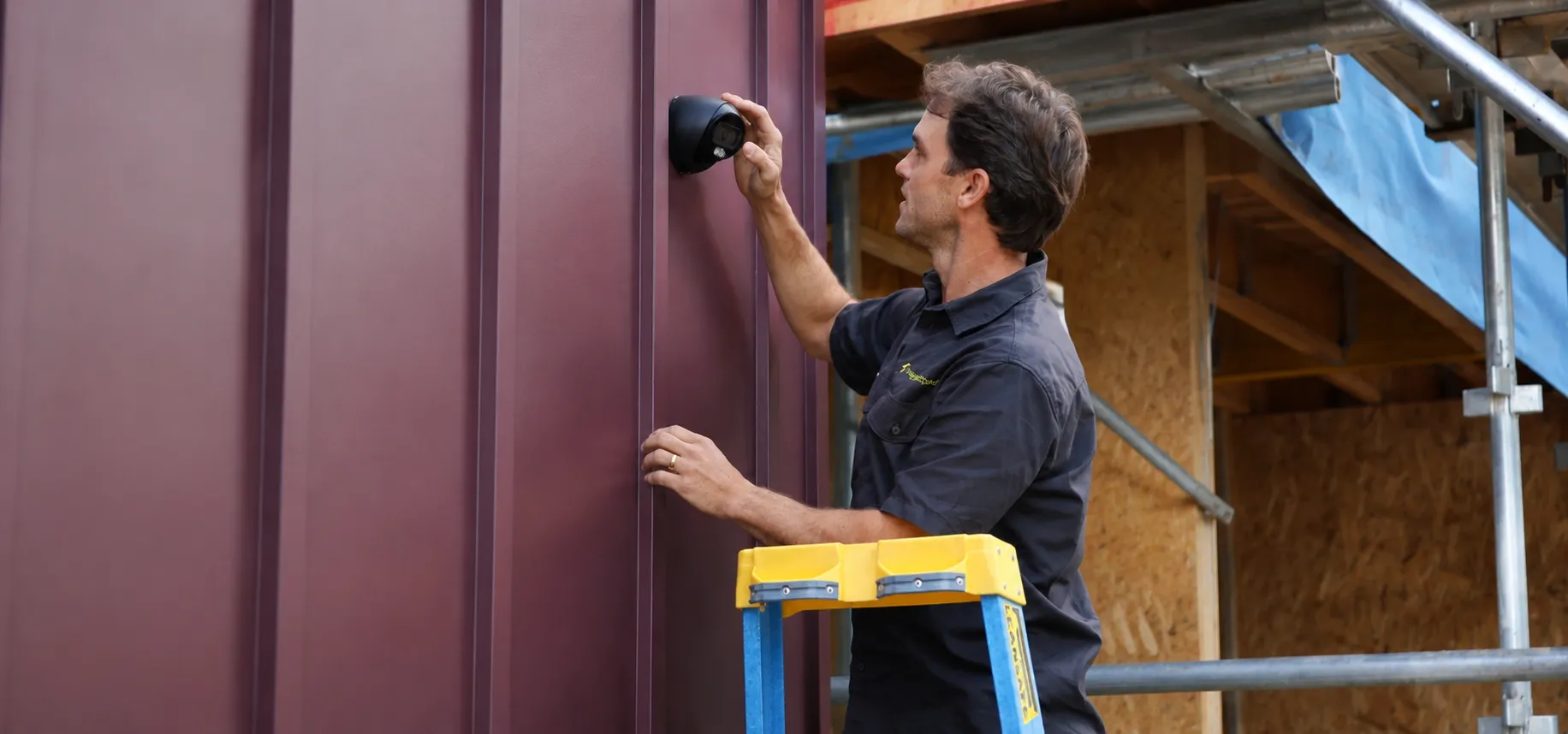
Good CCTV installation in a Newcastle home starts with a plan: which areas you need to see, how the cameras will be powered and recorded, and whether the work needs a licensed electrician. These CCTV installation tips walk through placement, weather, cabling and power, recording options, NSW privacy considerations, and when to call Insight Electrical.
A well-planned home security CCTV installation can help you see what is happening on your property, at the front door, down the side path or on the driveway. That is useful, and it is not a promise that cameras will stop crime. Getting the placement and the wiring right from the start matters more than buying the first camera you see online.
If you are looking at CCTV installation in Newcastle, Lake Macquarie or the Hunter, a licensed electrician can help you plan the system as a whole, then run and test the cabling properly.
Plan where the cameras need to see
Start with the places people actually approach the house. In a typical Newcastle or Hunter home, that usually means the front and back doors, the driveway, side paths, the garage and any other entry points. Give each camera a job, rather than hoping one unit will do everything. A corner camera may not cover the whole yard.
Where it matters, aim for a clear view of faces at a door, or number plates on the driveway, without pointing the lens straight into harsh afternoon sun, a reflective window or oncoming headlights that can wash out the picture.
For an outdoor camera, mount it high enough that it is hard to tamper with, and still low enough to see the detail you need. There is no single official height that fits every Newcastle home, so treat height as part of the plan, not a fixed rule. Indoor surveillance cameras are a different job again: they are there for a hallway, a living area or a garage door from the inside, not for rain and salt air.
Think about CCTV surveillance as a set of views you will actually review, not a camera on every corner. Walk around the house at dusk as well as in daylight, because shadows along a Lake Macquarie side path look different once the sun is gone.

Get outdoor cameras ready for the weather
Coastal weather in Newcastle and Lake Macquarie can be hard on anything fixed to an exterior wall. An outdoor camera needs a weather-rated housing and a mounting position that is not constantly blasted by rain, wind-driven spray or salt air. Eaves on a new build can give useful cover. An older Hunter home may need a different bracket or a slightly more sheltered wall.
Check the weather rating on the camera’s label, and don’t modify a fitting that’s connected to power. A licensed electrician can check the mounting, the seals and the cable entry so water is less likely to find its way in.
Plan power and cabling first, as this is often licensed work
This is where many plans to install a CCTV camera at home stall, because the camera is only part of the job. Some battery or plug-in wireless cameras are sold for homeowners to unbox and pair themselves. Once you need a new power point, data cabling through walls or the roof, or a hardwired camera, that is licensed work in NSW.
NSW Government advice is that DIY electrical work is dangerous and illegal, and that unless you are a qualified electrician you should never “carry out any electrical maintenance other than changing a light globe.” You can read that guidance on the NSW Government page about electrical safety in the home.
A licensed electrician can plan the CCTV wiring, run the cable, and connect CCTV cameras to the recorder and power supply as a complete system. You do not need to arrive with a camera wiring diagram and try to map the runs yourself. Insight Electrical lists security wiring for cameras and alarm systems on our data cabling in Newcastle page, along with Ethernet, fibre and coaxial cabling, home network cabling, and connection to NBN. A licensed electrician can run and test that cabling as part of a camera job.
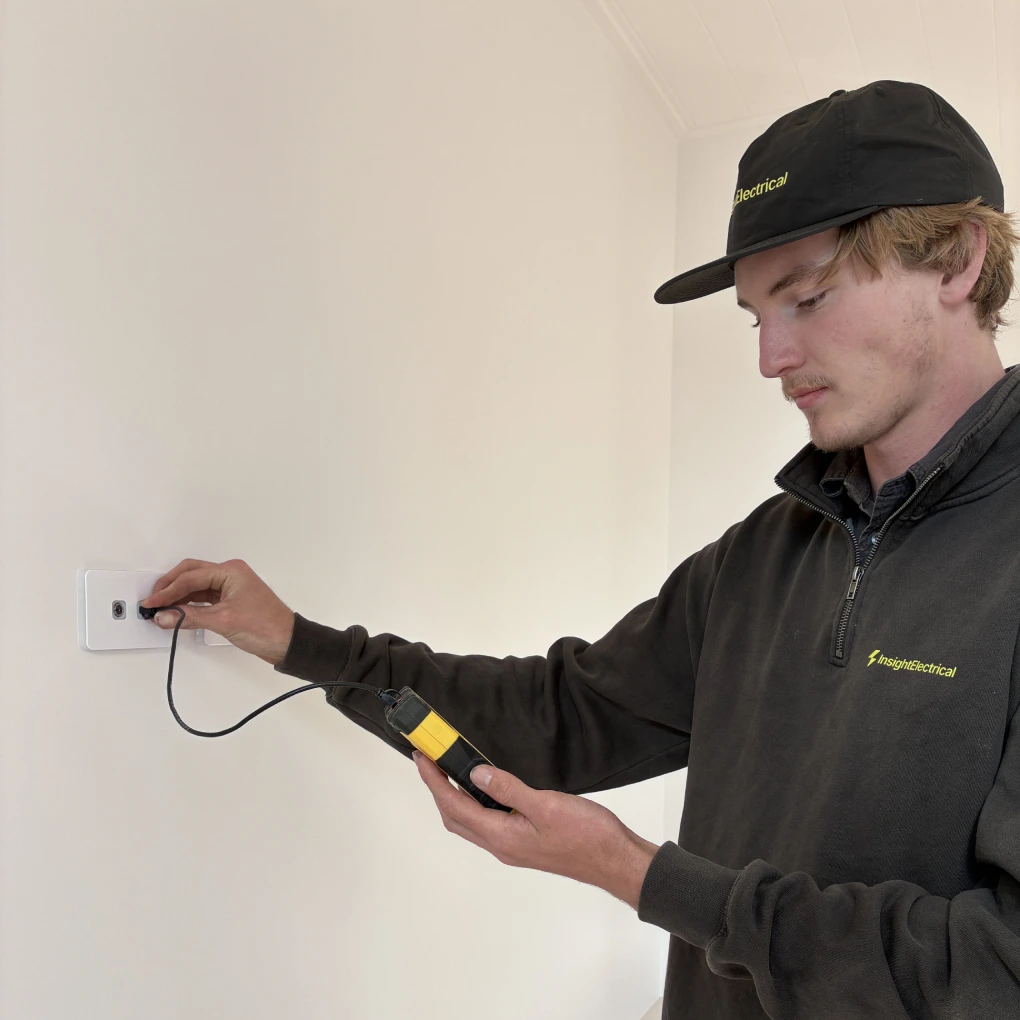
Wired versus wireless is a planning choice. A wired IP camera system often uses one cable for power and data. A wireless or Wi-Fi camera can mean fewer cable runs, but it still needs power or charging. The right option is the one that fits your house, not a standard package.
Decide how you will record and review footage
Work out how you will store and review footage before the cameras go up. An NVR records from IP cameras, often on a network. A DVR is the everyday term for a recorder that works with more traditional camera connections. Some IP systems are app-based, and you may be able to check a live view from a smartphone. We can talk through recorder, storage and app options with you.
Also talk through how much storage you need, whether you want night vision, and whether motion alerts would actually help you, or just fill your phone with notifications. The aim is a system you will use, not a recorder you never open.
Respect privacy and the neighbours
Cameras on your own property still have to respect the people next door. This is not legal advice, and the right answer can depend on your situation.
Legal Aid NSW says you can generally put a camera on your own property. You should consider whether it is pointed at someone else’s property and interferes with their privacy. Legal Aid notes it can be an offence to “peep or pry” on someone else, and that if you live in a strata property you should check the by-laws to see if they cover security cameras. If you are in a dispute with a neighbour, Legal Aid says you should get legal advice about your situation.
The State Library of NSW neighbours guide also covers CCTV and neighbours. It notes that planning approval may be required for the installation of CCTV, and that you should check with your local council. If you live in a multi-unit complex, a residential park or a retirement village, it also says to check whether a neighbour’s camera would breach the by-laws or community or village rules. If you have a problem with a neighbour’s CCTV, the guide suggests talking with them first, and considering mediation if that is not possible.
Point cameras at your own driveway, door and side path, not over the fence into a neighbour’s yard or window. If a privacy question is already causing friction, get legal advice rather than guessing.
Call Insight Electrical about CCTV installation in a Newcastle home
Call a licensed electrician if the job needs power, data cabling, roof or wall runs, several cameras, or you want the system designed and tested as a whole. Running cable through a wall or roof space, adding a power point, or hardwiring a camera is not a weekend DIY job.
When the work is done, you receive a Certificate of Compliance for Electrical Work (CCEW).
Insight Electrical is a Newcastle electrician with over 40 years of combined experience, working across Newcastle, Lake Macquarie and the Hunter from our base in Redhead. Book a residential electrician in Newcastle, or ask us about data cabling in Newcastle for security wiring, cameras and alarm systems. Call us for a free quote. We provide emergency call-out services during operating hours and will always do our best to assist.
Call Insight Electrical on 0468 043 743, Monday to Friday, 7am to 5pm, or contact Insight Electrical online.
Frequently Asked Questions
What are some tips for placing CCTV cameras correctly?
Start with the doors, driveway, side paths and other entry points, and give each camera a clear job. Aim for a useful view of faces or number plates where that matters, and avoid pointing a lens straight into harsh sun, glass or headlights. Mount an outdoor camera high enough to discourage tampering, and still low enough to see the detail you need.
What are the rules for installing CCTV in NSW?
This is not legal advice. Legal Aid NSW says you can generally put a camera on your own property, but you should consider whether it is pointed at someone else’s property and interferes with their privacy, and notes it can be an offence to “peep or pry” on someone else. If you live in strata, check the by-laws. The State Library of NSW also notes that planning approval may be required, so check with your local council. If you have a dispute, get legal advice.
Do I need an electrician to install CCTV?
You may be able to unbox and pair a plug-in or battery camera yourself. Once the job needs a new power point, data cabling through walls or the roof, or a hardwired camera, you need a licensed electrician. Insight Electrical can plan, install and test that work as a complete system.
Is it worth installing CCTV at home?
A home security CCTV installation can help you see what is happening on your property, which is useful at a front door, driveway or side path. It is not a promise that cameras will stop crime. Whether it is worth it depends on what you need to see, and on having the placement and cabling planned properly.
How much does CCTV installation cost?
The cost depends on the number of cameras, the type of system, how the cameras are powered and mounted, and how easy they are to access. For a broader look at the factors, see our article on security camera installation cost in Newcastle. Call us for a free quote.
How to install a CCTV system step by step?
This is not a DIY how-to. A licensed electrician plans the views, runs any power and data cabling, mounts the cameras and tests the system. If you want CCTV installation for your home, call us for a free quote rather than drilling and wiring it yourself.